
Kennedy refuses to guarantee he will follow CDC director’s vaccine guidance
04/22/2026 / By Cassie B.
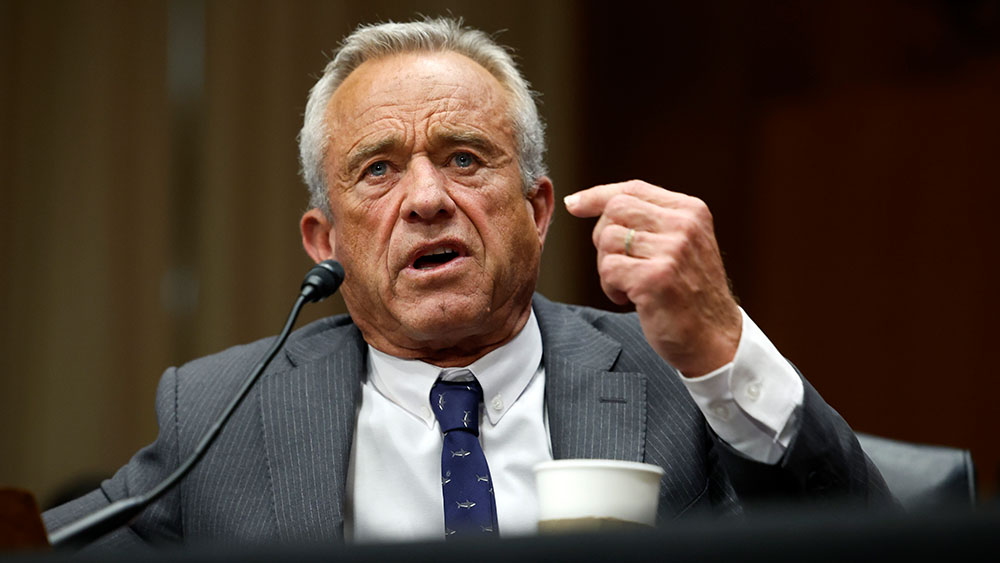
- Kennedy refused to commit to following his own CDC nominee’s vaccine guidance.
- His tenure has been marked by clashes over vaccine policy and advisory panel removals.
- The previous CDC director was fired after refusing to approve vaccine recommendations.
- Republicans defended Kennedy by highlighting his focus on less controversial health topics.
- The conflict raises a fundamental question about who controls U.S. public health policy.
A fundamental question about who controls America’s public health policy hung in the air during a Capitol Hill hearing this week as Health and Human Services Secretary Robert F. Kennedy Jr. pointedly refused to promise he would follow the vaccine recommendations of the very person President Donald Trump wants to lead the Centers for Disease Control and Prevention.
The exchange revealed the ongoing tension between Kennedy’s long-held personal skepticism of vaccines and the operational needs of the nation’s premier public health agency. It happened Tuesday before the House Energy and Commerce Committee, where Kennedy faced his fourth round of congressional questioning in recent days.
The moment came when Representative Raul Ruiz, a Democrat from California, pressed the secretary on Dr. Erica Schwartz, Trump’s nominee for CDC director. Schwartz, a former deputy surgeon general, has drawn support from mainstream public health circles.
“If Dr. Schwartz is confirmed, will you commit on the record today to implement whatever vaccine guidance she issues without interference?” Ruiz asked.
Kennedy’s reply was blunt. “I’m not going to make that kind of commitment,” he said.
A conflict-ridden tenure
This reluctance echoes past conflicts. Kennedy’s tenure has been defined by his views on immunization. Last summer, he fired all 17 members of the CDC’s independent vaccine advisory panel. A court later invalidated those firings, but Kennedy moved to change the panel’s charter to circumvent the ruling.
He also fired the previous Senate-confirmed CDC director, Dr. Susan Monarez, after less than a month in the role. Monarez testified that she was pushed out for refusing to approve vaccine recommendations from Kennedy’s handpicked advisers that she believed lacked scientific support. Kennedy has claimed he fired her because she would not say she was “trustworthy.”
Against this backdrop, Kennedy’s refusal to defer to a potential new CDC chief on vaccines is significant. It suggests that even with a more traditional nominee like Schwartz, the secretary intends to maintain direct influence over one of the agency’s most critical functions.
The White House strategy
Republicans at the hearing defended Kennedy, praising his work on dietary guidelines and rural health. The secretary’s opening statement highlighted nutrition and food safety, avoiding mention of vaccines. This aligns with reported White House efforts to steer Kennedy toward less controversial, more popular topics ahead of the midterm elections.
When asked if the White House instructed him to stop talking about vaccine skepticism, Kennedy said “no.” He also stated he had vetted Schwartz’s views on vaccines before her nomination and approved of her selection, although he had not spoken directly to Trump about it.
The nomination of Schwartz appears to be an attempt to stabilize the embattled CDC. The agency has faced plummeting morale, significant staff turnover, and leadership turmoil. Schwartz is a more conventional choice, and her success may depend on what happens with Kennedy.
Regardless of what one thinks about Kennedy’s views on vaccines, Tuesday’s hearing underscored a broader question that extends beyond any single official: who should ultimately have authority over public health policy in America? Kennedy’s refusal to grant unconditional deference to a CDC director — even one he helped vet — reflects a conviction that centralized health guidance should not go unchallenged. Whether that position proves to be a liability or a feature of his tenure may depend less on Washington politics than on whether Americans continue to demand more transparency and accountability from the institutions entrusted with their health.
Sources for this article include:
Submit a correction >>
Tagged Under:
. vaccines, big government, Big Pharma, CDC, Censored Science, Erica Schwartz, Government transparency, health freedom, medical violence, Public Health, RFK Jr, vaccine wars
This article may contain statements that reflect the opinion of the author