
These 8 nutrient-dense, galactagogue herbs can increase a mother’s milk supply
06/15/2026 / By Lance D Johnson
Across hospitals, lactation clinics, and kitchen tables worldwide, a quiet health crisis plays out with startling regularity. A new mother, often exhausted and emotionally raw, watches her baby fuss and wonders whether she is producing enough milk. In many cases, the answer is not a pharmaceutical prescription or a formula can, but rather a centuries-old arsenal of herbs, nutrients, and hydration strategies that modern science is only now beginning to validate. Low breast milk supply, in many cases, is not a verdict but a starting point.
Key points:
- Low milk supply is one of the most common reasons mothers stop breastfeeding early, yet it is frequently addressable through nutrition, hydration, and targeted herbal support called galactagogues.
- Galactagogues are substances, including foods, herbs, and medications, that promote or increase breast milk production, and they have been used across virtually every culture in recorded history.
- Fenugreek, one of the most widely studied herbal galactagogues, has been shown in clinical research to significantly increase breast milk volume in nursing mothers, particularly those of premature infants.
- Fennel stimulates the hormone prolactin, the primary driver of milk production, and also acts as a mild dopamine antagonist to further encourage prolactin release.
- Nutritionally-dense herbs such as nettle leaf, alfalfa, moringa, and red raspberry leaf supply the raw micronutrients, including iron, calcium, vitamins A, C, and K, that the body requires to manufacture milk.
- Silymarin from milk thistle, increases milk supply in investigative studies.
- Goat’s rue contains galegine, a compound chemically related to the active ingredient in metformin, and is traditionally credited with stimulating mammary gland development itself.
- Breastfeeding demands approximately 400 to 500 additional calories per day, and restricting intake depletes the mother, not the milk supply.
- Dehydration is among the most common and most correctable contributors to low milk supply, since water is the primary ingredient in breast milk.
What galactagogues are and why they matter
The word itself comes from ancient Greek, combining “galakt,” meaning milk, and “ag?gos,” meaning leading or promoting. A galactagogue is any substance, whether food, herb, or pharmaceutical, believed to support or increase breast milk production. These remedies appear in ancient Egyptian papyri, in traditional Ayurvedic medical texts, and in the oral traditions of midwives and herbalists across every inhabited continent. The collective weight of that history is not superstition. It reflects generations of empirical observation by women caring for women.
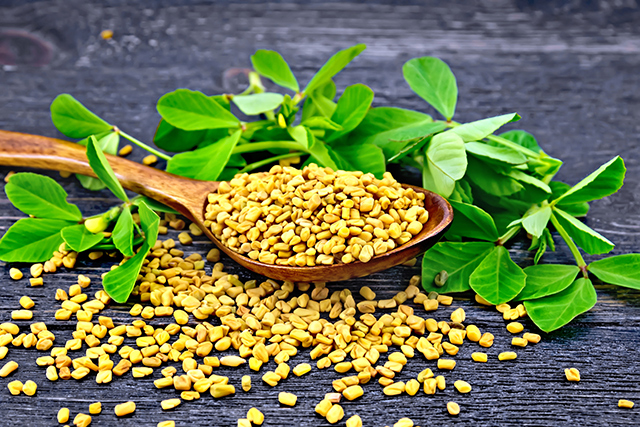
What modern research is now confirming is that several of these traditional herbs operate through identifiable biological mechanisms. Fenugreek, arguably the most widely recognized galactagogue in Western practice, contains phytoestrogens that influence hormonal signaling related to milk production. More interestingly, researchers believe fenugreek may also stimulate sweat gland activity, which is biologically relevant because mammary glands are themselves modified sweat glands. Clinical data published in the journal Current Research in Nutrition and Food Science in 2023 found that mothers of premature infants who consumed fenugreek tea showed significantly higher breast milk volumes and significantly lower infant weight loss compared to mothers in a placebo group. Fenugreek seed powder can be taken in supplements with ease.
Fennel, a fixture in Mediterranean cooking and traditional lactation teas across Asia and Europe, works through a distinct but complementary mechanism. Research indicates fennel stimulates prolactin secretion, the primary hormone responsible for milk production, and also acts as a mild dopamine antagonist. This is pharmacologically meaningful because dopamine normally inhibits prolactin. Blocking that inhibition, even gently, tilts the hormonal environment toward milk production. Prolactin drives supply, while oxytocin, another hormone influenced by regular nursing, simultaneously causes the mammary glands to contract and push milk toward the ducts. Fennel supports the first half of that equation. It is a great topping and can be included in many types of food.
The nutritional architecture behind every drop of milk
Breastfeeding is metabolically demanding in a way that often surprises new mothers. The body requires approximately 400 to 500 additional calories per day beyond a mother’s normal intake just to sustain milk production. This is not a time for caloric restriction. If a nursing mother does not consume enough nutrients, her body will prioritize the milk over her own stores, meaning she is the one who becomes depleted. This is where herbs like nettle leaf and alfalfa earn their place. Both are exceptionally rich in vitamins and minerals, including vitamins A, C, and K, iron, calcium, magnesium, and chlorophyll. Their contribution to lactation is nutritional rather than strictly hormonal, supplying the raw materials the body needs to manufacture milk. Both can be used in tea form or taken in the powdered form.
Of importance in supplying moms with nutrition is Moringa oleifera. Commonly known as the drumstick tree for its large seed pods, moringa is native to the western sub-Himalayan regions including India, Pakistan, Bangladesh, and Afghanistan. It has since been widely cultivated for food and medicine across tropical Asia, sub-Saharan Africa, Latin America, and the Caribbean. In the Philippines, it is known as Malunggay, where nearly every part of the plant is used in food, cosmetics, and herbal medicine. The leaves are particularly nutrient-dense, rich in protein, essential amino acids, iron, calcium, Vitamin C, and carotenoids, making them a vital supplement for malnourished children and lactating women. Moringa is available in powdered form, and easily mixed into a drink.
Another functional herb is red raspberry leaf. Long prized in women’s reproductive health, red raspberry leaf adds niacin, vitamin C, manganese, and gentle toning tannins to that nutritional foundation. It can be steamed as a tea.
Blessed thistle, frequently paired with fenugreek in commercial lactation formulas, may stimulate digestive secretions and hormonal responses related to milk, and some herbalists also find it beneficial for postpartum mood, a layer of support that matters given how closely emotional well being and milk supply are intertwined. Blessed thistle can be steamed as a tea, too.
Silymarin, derived from the milk thistle plant, is credited with the plant’s healing properties. This extract is composed of four flavonolignans – silybin, silychristin, silydianin, and isosilybin – which function as phytoestrogens. These compounds are thought to boost breast milk production by influencing D2 receptors, thereby elevating prolactin levels. Out of two studies conducted on silymarin, only one reported a meaningful rise in milk volume. This effect was observed after seven days of using a product called ‘Piulatte®’, which combined 400 mg of Silybum marianum with 130 mg of phosphatidylserine and 150 mg of Galega officinalis. In this formulation, the silymarin was bound to a phospholipid to form ‘phytosomes’, a method believed to enhance the absorption of the otherwise poorly soluble silymarin in the intestines.
Perhaps the most intriguing herb in the galactagogue category is goat’s rue, a plant with a distinguished history in European folk medicine. It contains galegine, a compound chemically related to the biguanide structure that gives metformin, the diabetes medication, its activity. Traditionally, goat’s rue is credited not only with increasing milk production but with encouraging the development of the mammary glands themselves, a claim that has attracted enough scientific curiosity to appear in published scoping reviews, even if large randomized controlled trials remain to be done.
Now, these herbs are not a replacement for hydration. Hydration underpins everything. Water is the primary ingredient in breast milk, and inadequate fluid intake is among the most common, and most easily corrected, contributors to reduced supply. Keeping a large water bottle nearby during feeds, drinking herbal lactation teas throughout the day, and consuming broth and water-rich foods all contribute meaningfully to total fluid intake.
Moreover, none of these galactagogues can replace the fundamental signal that drives supply: frequent nursing or pumping. Herbs support a system that must first be activated by demand. Together, these tools, botanical, nutritional, and behavioral, offer nursing mothers a genuine and science-grounded path forward.
Sources include:
MyPrivia.com [PDF]
Submit a correction >>
Tagged Under:
alfalfa herb, blessed thistle, breastfeeding support, fennel seeds, fenugreek benefits, food cures, food is medicine, food science, galactagogues, goat's rue, health science, herbal lactation, herbal tea, hydration tips, infant feeding, lactation nutrition, maternal health, milk supply, natural remedies, nettle leaf, nursing mothers, postpartum care, prolactin hormone, red raspberry
This article may contain statements that reflect the opinion of the author