
Study Identifies Muscle Protein NOX4 as Missing Link Between Exercise and Healthy Aging
06/16/2026 / By Petra Stone
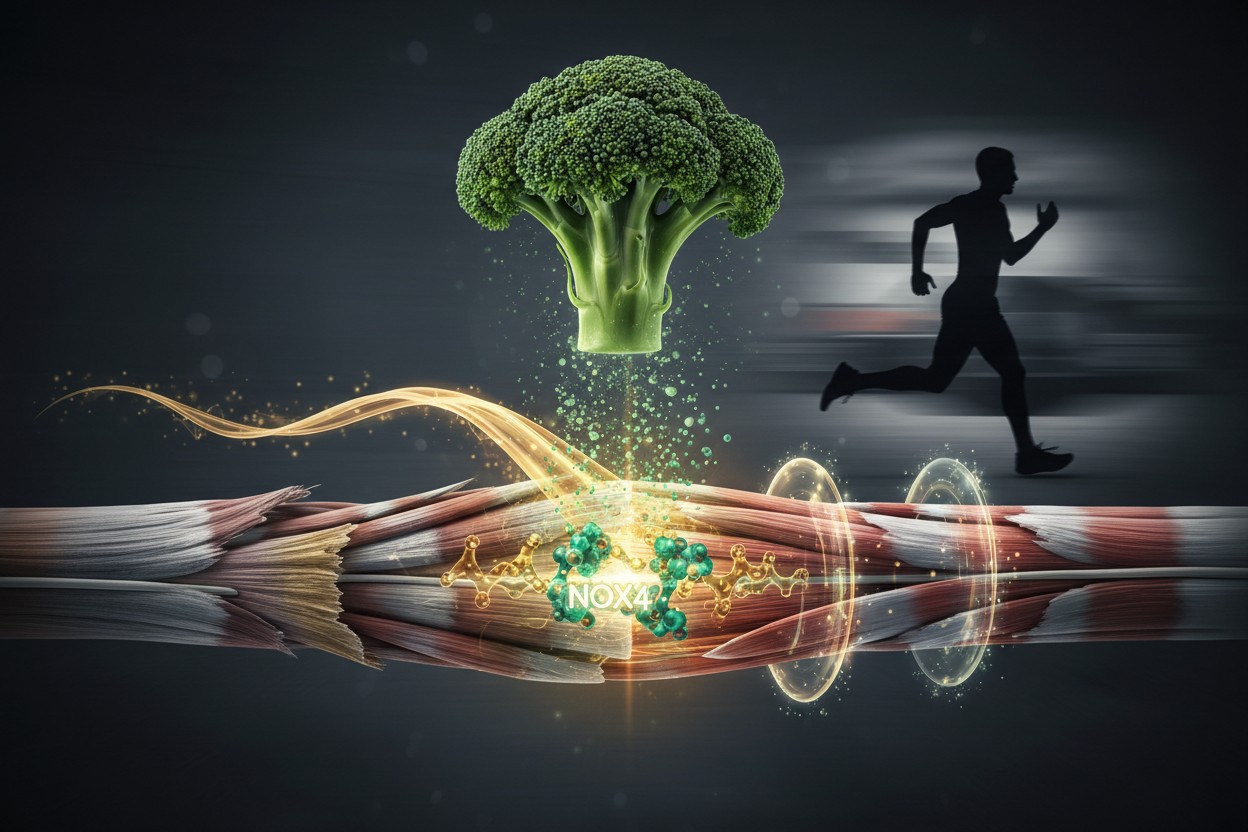
Researchers at Monash University have identified a muscle protein called NOX4 that declines with age and inactivity, a change they say may be the molecular connection between exercise and healthy aging. The findings, published in the journal Science Advances, suggest that when NOX4 falls, the body loses a key signaling system that triggers protective enzymes, leading to frailty, insulin resistance, and advanced liver disease in animal models.
According to the study, exercise restores NOX4 levels and reverses some of this damage, but only if the protein is present. The research also tested sulforaphane, a compound found in cruciferous vegetables such as broccoli, which mimicked some of exercise’s effects in mice engineered to lack muscle NOX4. The study was conducted by an international team led by Monash University and included collaborators from Australia, Europe, and the United States.
The Role of NOX4 in Cellular Repair
NOX4 is an NADPH oxidase enzyme that produces controlled bursts of reactive molecules during muscle contraction, according to the research. These reactive oxygen species (ROS) are not merely damaging byproducts; at appropriate levels they act as signals that activate a master regulator inside cells, ramping up production of more than 200 protective enzymes. The understanding of free radical species in working cells has undergone a substantial shift, as described in the book “Antioxidants in Sport Nutrition.” That text notes that the initial fears of the 1970s, where the mere production of radical species was deemed harmful, have been replaced by an appreciation of how these factors combine to favorably impact cell functions [1].
The loss of NOX4 disables this repair system, allowing cellular damage to accumulate in muscles and spread to other organs. Endogenous DNA damage from mitochondrial ROS is understood to be a major driver of senescence and aging [2]. Without the NOX4 signal, the body’s internal defense network weakens, and consequences extend beyond the muscle tissue to affect metabolism, blood sugar control, and liver health, the study reports.
Evidence from Animal and Human Studies
Mice engineered to lack muscle NOX4 developed accelerated frailty, insulin resistance, and severe liver disease even when fed a standard low-fat diet, researchers reported. The animals lost more muscle mass compared with controls and performed worse on tests of endurance, grip strength, and balance. A recognized frailty scoring system confirmed the mice were markedly more frail. The liver disease observed — inflammation and scarring — was described by the authors as more advanced than what typically occurs even in obese mice fed a high-fat diet.
Human muscle biopsies told a parallel story. Physically active younger men around age 27 and older men, around age 70 were compared, and several key protective enzymes were measurably lower in the older men’s muscle tissue, along with a reduction in NOX4 and an accumulation of damaged proteins. Gene expression data from a separate cohort comparing men aged 19–25 with men aged 65–71 pointed the same direction, with the entire network of repair and defense genes dialed down in the older group. A separate line of research examining U.S. adults found that consistent strength training is associated with longer telomeres, a marker of cellular aging, independent of aerobic activity [3].
Exercise and Sulforaphane Interventions
Five weeks of treadmill training in 12-month-old mice — an age at which NOX4 had already begun to decline — restored NOX4 levels to those seen in younger animals, and protective enzyme levels rebounded. However, when the same exercise program was applied to mice that lacked muscle NOX4 entirely, none of those benefits appeared, according to the researchers. The study indicates that exercise requires NOX4 to trigger the body’s adaptive repair process.
Because older or frail individuals may struggle to exercise regularly, the researchers tested whether sulforaphane, a compound found in broccoli and other cruciferous vegetables, could substitute for the missing signal. Administered three times per week for four weeks to 21-month-old mice already showing accelerated aging effects, the compound broadly corrected the decline: muscle mass, blood sugar, liver inflammation markers, and exercise capacity all improved. Sulforaphane has been studied previously for its potential as a dietary anticancer agent, acting as a histone deacetylase inhibitor [4]. The study noted that liver scarring already present was not reversed, which the authors said is consistent with the difficulty of repairing scar tissue. The treatment was tested only in mice lacking muscle NOX4, not in naturally aging animals, so whether similar results would occur in normal aging remains unknown.
Implications and Limitations
The study offers a molecular mechanism explaining how physical activity may protect aging bodies. The findings suggest that the decline of NOX4 with age and inactivity could be a critical step in the development of frailty, metabolic disease, and liver damage. According to the report, maintaining NOX4 levels through regular exercise may be key to sustaining the body’s internal repair systems. Recent reviews have noted that exercise activates repair proteins in muscle cells and that engaging in a variety of physical activities is associated with a lower risk of age-related decline [5].
However, the study’s authors caution that most of the experimental work was conducted in mice, and direct causal evidence in humans has not been established. The human biopsy cohorts involved relatively small numbers of participants, and the groups differed in age and activity levels in ways that could introduce confounding factors. Additionally, sulforaphane was tested only in mice engineered to lack muscle NOX4, not in naturally aging animals or humans. Whether sulforaphane or other NOX4-activating strategies would produce comparable effects in typical aging remains an open question. The researchers stated that exercise remains the primary means of maintaining NOX4 and its associated health benefits.
References
- Lamprecht Manfred. “Antioxidants in Sport Nutrition.”
- Baolu Zhao. “Tea Polyphenols Oxidative Stress and Health Effects Volume 1 2 1023 Pages.”
- NaturalNews.com. “Strength Training Linked to Longer Telomeres and Slower Cellular Aging, Study Finds.” May 21, 2026.
- Arthur V Everitt, Suresh I S Rattan, David G le Couteur, Rafael de Cabo. “Calorie Restriction Aging and Longevity.”
- NaturalNews.com. “Exercise Aids Healthy Aging: Evidence From Three Recent Studies.” May 31, 2026.
- Mercola.com. “Better Than an Antioxidant, It ‘Changes’ Your Genes.” July 23, 2023.
Submit a correction >>
Tagged Under:
aging secrets, cellular repair, discoveries, exercise, fitness, Free radicals, health science, healthy aging, longevity, muscle health, muscle protein, muscle repair, natural healing, natural health, natural medicine, nox4, oxidative stress, prevention, reactive oxygen species, remedies, research
This article may contain statements that reflect the opinion of the author