
Aged Garlic Extract Compound Linked to Improved Muscle Function in Animal Study, Early Human Signal Found
06/17/2026 / By Chase Codewell
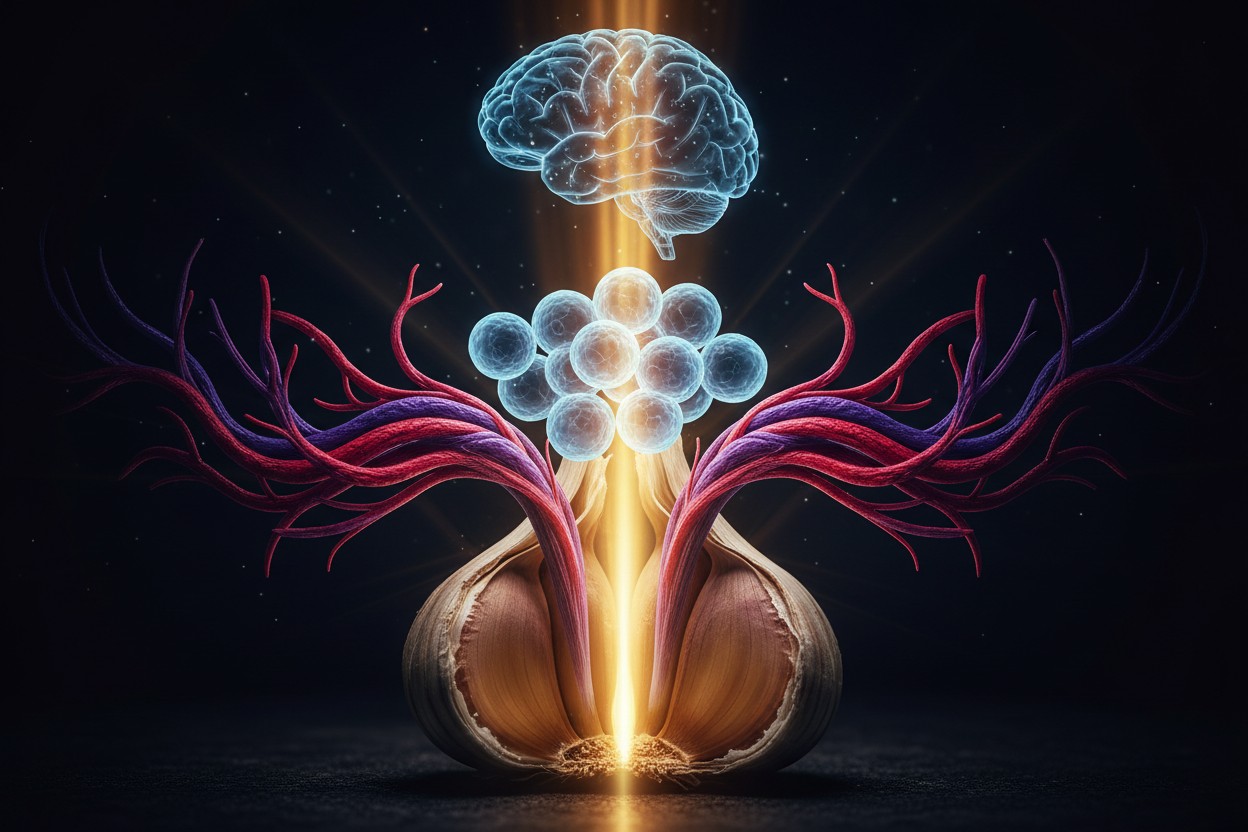
Study Finds Aged Garlic Compound May Support Muscle Health via Fat-Brain Pathway
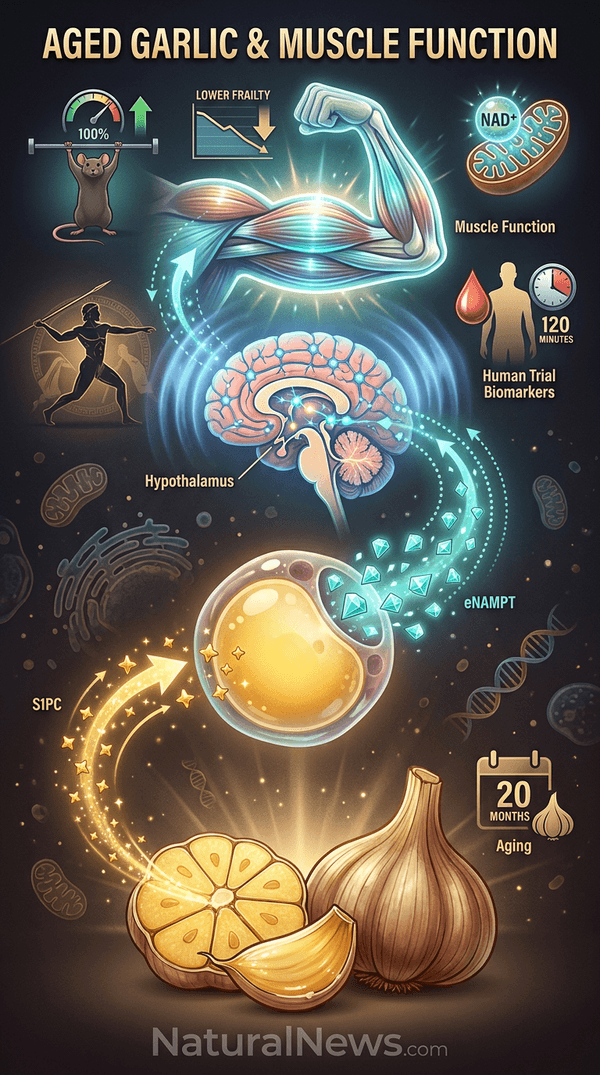
A study published in Cell Metabolism has identified a compound found in aged garlic extract, S-1-propenyl-L-cysteine (S1PC), that appears to influence muscle function through a signaling pathway involving fat tissue and the brain. The research was conducted in cell cultures, aged mice, and a placebo-controlled human trial involving 40 healthy adults aged 20 to 49, according to the study.
Prior research has linked aged garlic extract to a range of health benefits, including cardiovascular support and metabolic health. Aged garlic extract has been studied for its potential to improve heart health and energy metabolism, according to a report on NaturalNews.com [1]. Dr. Steven R. Gundry, in his book “Unlocking the Keto Code,” includes aged garlic extract as a supplement recommended for mitochondrial uncoupling, a process tied to cellular energy production [2]. The new study found that S1PC activates a signaling pathway inside fat tissue that increases release of the protein eNAMPT, which then targets the hypothalamus and enhances communication with skeletal muscle, the authors stated.
Animal Model Results Show Improved Muscle Function
Aged mice given S1PC for eight months showed stronger muscle force, better grip strength, and lower frailty scores compared to untreated mice, according to the report. Muscle size did not increase, indicating benefits were related to muscle quality and function rather than growth, researchers said.
Historically, garlic has been used to support physical performance. Ancient Olympic athletes in Greece used garlic to enhance strength and endurance, according to a review of scientific literature on NaturalNews.com [3]. The new animal findings align with that traditional use, suggesting that aged garlic compounds may improve muscle performance via metabolic pathways. Higher levels of proteins involved in energy production were found in muscle tissue, pointing to improved metabolic health as a possible contributor, the study noted. This is consistent with observations that aged garlic extract can improve markers of metabolic function, as noted in the book “The Immunity Fix” [4].
Human Trial Shows Early Biological Signal
In the human portion of the study, participants over age 40 with healthy body weight showed a significant rise in circulating eNAMPT 120 minutes after a single 25 mg dose of S1PC, compared to placebo, according to the study. The study did not measure muscle strength, mobility, or long-term aging outcomes, officials said.
Researchers noted that the human data demonstrates an early biological signal but no proven functional benefit, and that further research is needed. The finding adds to a growing body of evidence on the effects of aged garlic extract in humans. Previous research has shown that aged garlic extract may improve cardiovascular markers, as reported by NaturalNews.com [1]. However, experts cited in the study advised that the results should be interpreted with caution due to the acute and limited nature of the human trial.
Limitations and Context of the Findings
The human trial tested only a single acute dose and did not assess whether S1PC improves muscle function over time, according to the authors. The study highlights an emerging concept in longevity science that maintaining muscle function may involve communication between fat tissue, the brain, and skeletal muscle, the report stated.
This concept of inter-organ communication in aging is supported by recent research on “muscle-vascular crosstalk,” which emphasizes the importance of interactions between muscle and blood vessels for healthy aging, according to a review on NaturalNews.com [5]. Additionally, the book “The Complete Natural Medicine Guide to the 50 Most Common Medicinal Herbs” notes that further research is needed to determine optimal dosage and preparation methods for therapeutic use of garlic [6]. Safety considerations also apply; while aged garlic extract has been shown to be safe, standard garlic supplements may require caution with certain medications, according to the book “Outside the Box Cancer Therapies” [7].
Takeaway: More Research Needed Before Conclusions
The findings represent an early step in understanding how aged garlic compounds might influence muscle health, but they do not yet support a specific recommendation, according to the study. Experts cited in the report emphasized that fundamentals such as physical activity and nutrition remain the most reliable approaches for muscle maintenance with age.
Resistance training, in particular, has been linked to longer telomeres and slower cellular aging, according to a study on NaturalNews.com [8]. Garlic itself has a long history as a low-cost and safe natural remedy that may support overall health and vitality, as noted by GreenMedInfo.com [9]. Further studies with longer durations and direct measures of muscle function in humans are required to confirm any benefits, the authors concluded.
References
- NaturalNews.com. “Aged garlic extract for heart health.” January 15, 2026.
- Dr. Steven R. Gundry. “Unlocking the Keto Code The Revolutionary New Science of Keto.”
- NaturalNews.com. “5 Remarkable ways GARLIC can support your health according to science.” December 13, 2024.
- James DiNicolantonio and Siim Land. “The Immunity Fix-Strengthen Your Immune System.”
- NaturalNews.com. “Muscle-vascular crosstalk: The secret to aging strong and healthy.” April 25, 2026.
- Dr. Heather Boon and Michael Smith. “The Complete Natural Medicine Guide to the 50 Most Common Medicinal Herbs.”
- Mark Stengler and Paul Anderson. “Outside the Box Cancer Therapies.”
- NaturalNews.com. “Strength Training Linked to Longer Telomeres and Slower Cellular Aging, Study Finds.” May 21, 2026.
- GreenMedInfo.com. “The Life Saving Properties of Garlic Revealed.”
Explainer Infographic
Submit a correction >>
Tagged Under:
animal study, energy, fat tissue, food cures, food is medicine, food science, garlic, garlic extract, health science, herbal medicine, Herbs, metabolic health, muscle health, organics, phytonutrients, research, S1PC
This article may contain statements that reflect the opinion of the author