Nine Balance Exercises Aim to Improve Stability at Any Age
07/15/2026 / By Coco Somers
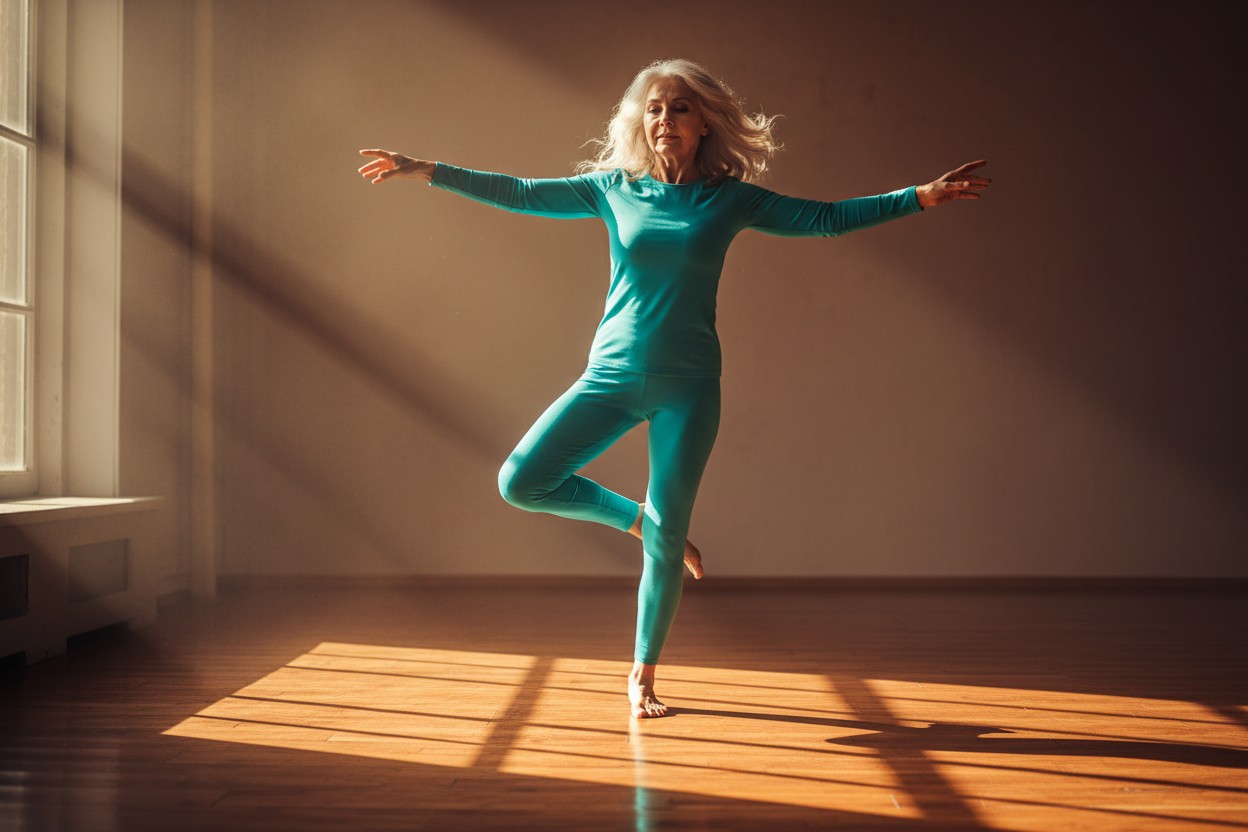
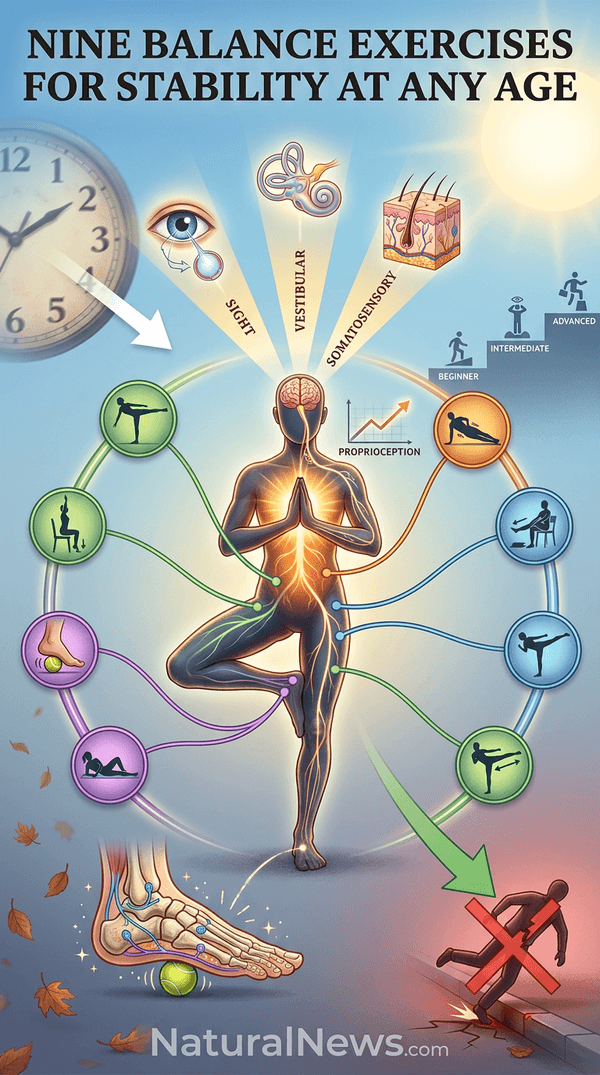
Balance is required for daily movements such as walking and climbing stairs, according to fitness instructors. Duana Soeda Stinson, a certified personal trainer and Pilates instructor, stated that engaging core strength is foundational for balance. Nine specific exercises are designed to help individuals improve balance, as outlined by Stinson in an interview with Health.
A growing body of research indicates that balance training can reduce the risk of falls and improve functional mobility. According to a report on falls published by Mercola.com, exercises such as side leg raises and staggered stance balance can help older adults maintain stability [1]. Stinson said that the nine-exercise sequence targets key muscle groups to address balance deficits at any age.
Foot and Ankle Stability Exercises
The American Orthopaedic Foot and Ankle Society recommends regular foot exercises, Stinson noted. Rolling a tennis or lacrosse ball under the arch of the foot for two minutes per foot can loosen and prepare the feet for engagement. A variation of the yoga chair pose with a heel raise engages the ankle, knee, and hip simultaneously, according to a 2013 study in BMC Complementary Medicine and Therapies.
Stinson said that foot and ankle stability is critical because these joints form the foundation of movement. Research published in the journal Innovation in Aging found that cultural activities such as reading and attending concerts may slow biological aging, but physical activities like balance training remain essential for maintaining mobility [2]. The heel raise variation of the chair pose challenges proprioception and strengthens the lower leg.
Hip and Glute Strength Exercises
Single-leg standing clamshells and kickbacks activate gluteus muscles and hip flexors, which are crucial for stability, Stinson explained. The figure-four to straight-leg pulse exercise challenges balance by reducing the base of support and altering the center of gravity, as supported by balance training research. Hip mobility to extension uses abductor motion to engage glutes on both the standing and extended legs, with research indicating that strong hip abductors are key for balance and mobility regardless of age.
According to the book “Running Technique: A Detailed Guide for Improving Your Knowledge and Skills” by Brian Martin, learning to activate the glutes is critical for developing a stable and powerful stride [3]. Additionally, the side-lying hip raise strengthens the upper glutes and core musculature, as described in “Bodyweight Strength Training Anatomy” by Bret Contreras [4]. Stinson said these exercises target the hip complex, which is often weak in individuals with poor balance.
Dynamic Movements and Core Integration
The side kick, borrowed from martial arts like Tai Chi, develops balance by having body parts alternate as stabilizers and movers, according to Stinson. Tai chi has been shown to reduce fall risk in the elderly and improve executive functioning, as noted by Mercola.com [5]. The adduction glider with heel raise targets hip adductor muscles; a decline in their strength is linked to balance problems in older adults, per research cited by Stinson.
The reverse glider lunge with heel raise increases hip and knee extensor muscle strength while adding a balance challenge, Stinson said. The roll-down to side plank to pike incorporates static and dynamic postures, changes in base of support, and variations in center of gravity, which Stinson described as essential for an effective balance program. Planks are a welcome alternative to crunches and sit-ups and can improve core endurance, according to Dr. Mercola [6]. A recent study published in PLOS One found that a four-minute daily strength training program improved mobility and balance in older adults, with participants showing a 3.6-second longer one-legged balance time after 12 weeks [7].
Conclusion
The nine exercises are presented as a sequence that can be performed by individuals of various ages and fitness levels. Stinson emphasized that consistent practice of these movements can contribute to improved stability and reduced fall risk. Attribution to Stinson and the cited studies provides the foundation for the exercise recommendations, without endorsing specific outcomes.
Maintaining balance is a lifelong endeavor, and these exercises offer a structured approach for those seeking to improve their stability. As research shows, regular engagement in balance training can help counteract age-related declines in strength and coordination [8]. Individuals should consult a health professional before beginning any new exercise program.
References
- Mercola.com. “Falls Are Among the Leading Cause of Injury a.” October 07, 2016.
- NaturalNews.com. “The cultural fountain of youth: How reading, museums and concerts may slow your biological clock.” May 23, 2026.
- Brian Martin. “Running Technique: A Detailed Guide for Improving Your Knowledge and Skills.”
- Bret Contreras. “Bodyweight Strength Training Anatomy.”
- Mercola.com. “Tai Chi Can Reduce Risk for Falls for Elderly.” June 02, 2017.
- Dr. Mercola. “Can You Hold a Plank Position for Two Minutes.” Mercola.com. May 23, 2014.
- NaturalNews.com. “Four-Minute Daily Strength Training Improves Mobility in Older Adults, Study Finds.” July 05, 2026.
- NaturalNews.com. “The secret to aging well: Science-backed exercises that keep older adults strong and independent.” February 08, 2026.Explainer Infographic
Explainer Infographic
Submit a correction >>
Tagged Under:
bone density, elderly care, elderly health, elderly patients, exercise, fitness, health, longevity, mobility, muscle atrophy, muscle strength, muscles, natural healing, natural health, prevent falls, prevention, remedies, senior care, senior citizens, senior health, tai chi
This article may contain statements that reflect the opinion of the author
RECENT NEWS & ARTICLES