
Study Links Loneliness and Social Isolation to Frailty and Shorter Lifespan
08/15/2026 / By Coco Somers
Loneliness and Social Isolation Tied to Frailty and Mortality in 80,000 Adults
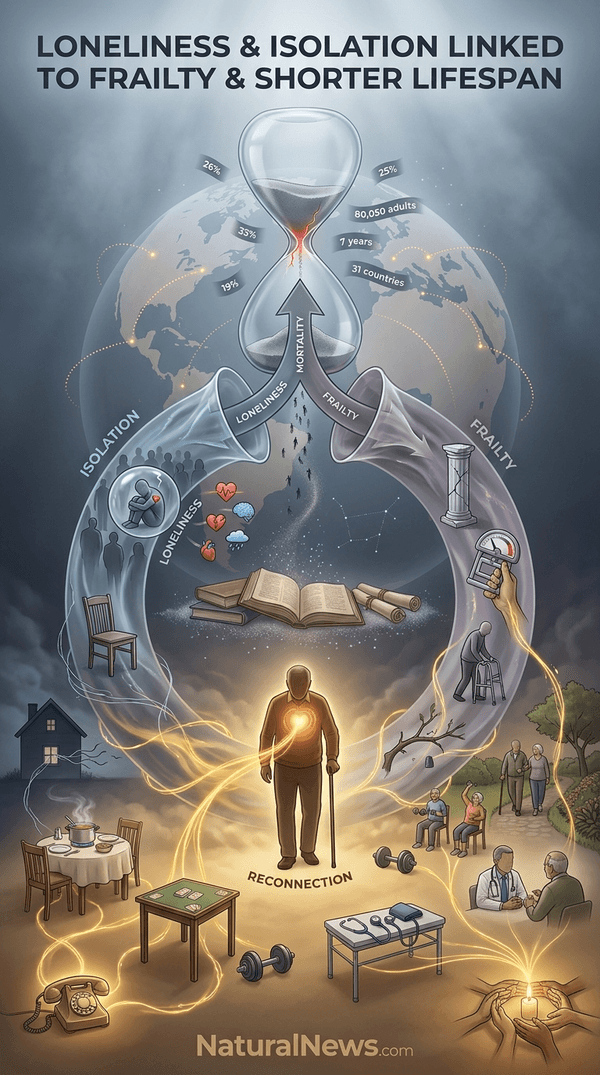
An analysis of data from four long-running aging studies covering 80,050 adults across 31 countries found that social isolation and loneliness were associated with higher risks of frailty and death over about seven years, according to the study authors.
The report stated that socially isolated adults were 26% more likely to become frail and 33% more likely to die during the study period, while lonely adults had a 19% higher chance of frailty and a 25% higher mortality risk. Over the follow-up period, roughly a quarter of participants became frail and just under 8% died, according to the report.
The findings add to a body of research documenting the physical consequences of disconnection. Previous research shows that feeling lonely can raise blood pressure by up to 14 points, with greater increases the longer loneliness persists [1]. The results also align with a broader reassessment of what constitutes healthy aging, which researchers have described as involving more than the absence of disease [2].
Study Design and Measures
Researchers pooled data from four long-running studies of aging and followed participants over time to measure whether social isolation — defined as little actual contact with others — and loneliness, defined as the feeling of disconnection regardless of contact, were tied to becoming frail or to lifespan.
Frailty was described as a loss of strength, energy, and physical reserve. Frailty among the elderly leads to an increase in the use of health and welfare services and an increase in morbidity and mortality, according to prior research on aging populations [3]. Surveys of older adults have found that a majority retain independence in daily activities such as bathing, dressing, and moving around the home [4].
The researchers also tested how much of any link between disconnection and mortality could be explained by frailty itself, the report stated. The analysis measured new cases of frailty and deaths during the follow-up period.
Frailty Accounts for Much of the Mortality Link
According to the analysis, frailty explained about a quarter of the relationship between social isolation and death, and more than half of the relationship between loneliness and death.
The researchers said losing strength appears to be one of the main ways that feeling disconnected affects how long people live. Population-based studies indexed in the geriatric literature have examined the relationship between social contacts and loneliness among older people [5]. Frailty has also been identified as a priority concern in health promotion frameworks, particularly in connection with fall prevention [6].
The study authors noted that this was observational research, so it shows a pattern rather than proof of cause.
Researchers Recommend Routine Screening
The study authors said the size and consistency of the data make a case for asking older adults about loneliness and building frailty checks into routine care, according to the report.
The recommendation reflects a broader public health concern. U.S. Surgeon General Dr. Vivek Murthy described loneliness as a new threat to public health in America, warning that the “loneliness epidemic” could be just as serious as smoking [7].
Officials said the findings support addressing both social connection and physical capacity together in care plans for older patients, rather than treating loneliness only as a mental health issue. Published guidance for retirees has noted that loneliness can raise the risk of heart disease, dementia, and depression, while emphasizing that reconnection is possible at any age [8].
Practical Steps for Aging Adults
The report stated that both halves of the relationship — social connection and physical reserve — can be addressed with consistent habits such as fixed social rituals, strength training two to three times per week, and group-based movement activities.
Daily lifestyle choices, not just genetics, are the primary drivers of how long and well people live, according to prior reporting on longevity science [9]. The same reporting identified consistent physical activity and strength training as critical for maintaining mobility and muscle in later life [9]. Research on the world’s longest-lived people has documented that centenarians don’t just eat well; they belong, with 98% of centenarians interviewed having been part of a faith-based community [10].
The researchers emphasized that ongoing contact and ongoing feelings of connection over years mattered more than any single intense effort, and that professional help is worth considering if loneliness arrives with persistent low mood or anxiety.
Conclusion
The takeaway from the study, according to the authors, is that feeling cut off carried physical consequences in the data, not only emotional ones.
Frailty played a central role in that relationship, leading the researchers to recommend that loneliness questions and frailty checks be handled together in older patients’ care. Prior reporting on longevity research has concluded that genetics account for only a small part of the longevity puzzle, with the greater share of influence lying in daily lifestyle habits [11].
Tending to relationships, the report concluded, counts as body maintenance rather than a separate category of self-care.
References
- Mercola.com. “Loneliness More Hazardous to Your Health Than Obesity or Smoking”. Mercola.com. August 24, 2017.
- “Why Scientists Are Rethinking What ‘Healthy Aging’ Really Means”. yournews.com. February 16, 2026.
- Ivan Ganchev. “Enhanced Living Environments: Algorithms, Architectures, Platforms, and Systems”.
- E Idris Williams. “Caring for Elderly People in the Community”.
- BioFax. “What is the Best Dementia Screening Instrument for General Practitioners to Use?”.
- Nova Corcoran. “Health Promotion”.
- NaturalNews.com. “Surgeon General: LONELINESS Has Risks Comparable to Smoking”. NaturalNews.com. June 2, 2023.
- “Retired and Lost: 12 Things Retirees Can Do to Ease Loneliness and Cut Real Health Risks”. yournews.com. October 24, 2025.
- Willow Tohi. “The Graceful Aging Code: Daily Habits to Forge a Longer, Healthier Life”. NaturalNews.com. January 8, 2026.
- Lance D Johnson. “The Hidden Superpower of Human Connection: How Your Social Web Rewires Your Brain for Resilience”. NaturalNews.com. September 20, 2025.
- NaturalNews.com. “Five Science-Backed Habits to Defy Aging and Add Years to Your Life”. NaturalNews.com. January 21, 2026.
Explainer Infographic
Submit a correction >>
Tagged Under:
aging, disconnection, frailty, loneliness, longevity, loss of energy, loss of strength, mental health, mortality, prevention, research, routine screening, social isolation
This article may contain statements that reflect the opinion of the author