Squat variations offer a blueprint for lower-body strength, balance, and injury prevention
08/17/2026 / By Cassie B.
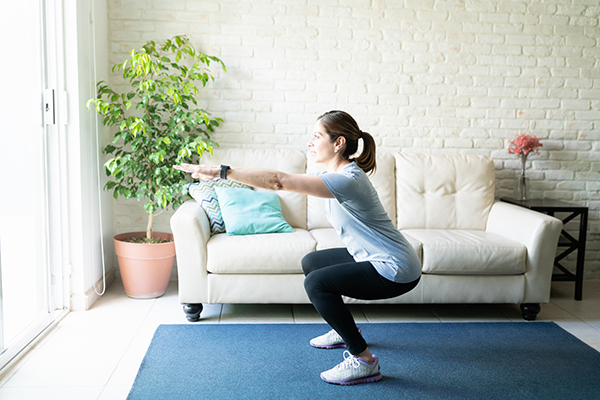
- Squats build functional strength, balance, and fall prevention without requiring gym equipment.
- The chair squat offers a safe entry point for beginners, using a seat as a controlled stopping point.
- Wall squats and bodyweight squats improve core stability, with form adaptable to individual hip and femur structure.
- Plié and lateral walk variations target hip adductors and outer hip stabilizers for broader muscle engagement.
- Experts recommend performing the routine three to five times weekly, consulting a doctor first for knee concerns.
Fitness experts are championing a return to one of humanity’s most natural movements — the squat — as a cornerstone for building functional strength, improving balance, and reducing the risk of falls. This guidance arrives as many adults seek accessible, equipment-free ways to maintain mobility and muscle tone without a gym membership.
The exercise, popularized in American fitness culture in the early 20th century by strongmen such as Henry “Milo” Steinborn and George Hackenschmidt, has evolved into a versatile toolkit of variations suitable for everyone from beginners to seasoned athletes. Physiotherapists note the movement is so fundamental that it underlies everyday tasks such as rising from a chair or getting off the toilet. These movements primarily target the glutes, quadriceps, and hamstrings while engaging the core and accessory stabilizer muscles, offering a workout that can be done in the living room, office, or park with minimal fuss.
Chair squat offers safe entry point for strength building
For those new to squatting or managing joint discomfort, the chair squat provides a secure starting point. The chair creates a defined stopping point, sparing the knees, glutes, and quadriceps some of the work of controlling the descent and giving the exerciser a guaranteed place to rest between reps.
To perform it, stand with feet hip-width apart in front of a chair, shift the weight forward, and slowly sit back while extending the arms until parallel with the floor. As soon as the seat is reached, reverse the movement, lowering the arms while rising. One sit-and-stand cycle counts as a rep; aim for three sets of 15. Those who can’t manage a full range of motion can shorten it into a partial squat.
Static wall hold and bodyweight squat build core and stability
The wall squat trades movement for an isometric hold. Stand with your back against a wall, feet about 18 inches out, and slide down until your hips and knees reach a 90-degree angle, as if sitting in an invisible chair. Hold for 30 seconds; three sets is the target. Physical therapists say squat form varies from person to person — hip and femur structure affect how deep or wide a squat should be — so this angle is a guideline, not a rule.
For the classic bodyweight squat, stand with feet hip-width apart and arms crossed high on the chest. Descend over one to two seconds, pushing the hips back to take pressure off the knees while keeping the back straight and knees tracking forward. Lower to 90 degrees or as far as is comfortable, then rise. Three sets of 12 is the prescription; lean on a stable object if balance is an issue.
Plié and lateral walk expand muscle engagement
The plié squat targets the often-neglected hip adductors by widening the stance beyond hip-width and turning the toes out about 45 degrees. Keeping the back upright, squat to 90 degrees while clasping the hands at the chest, then return to standing. As with the other movements, three sets of 12 is the target.
The lateral squat walk adds side-to-side motion, engaging the outer hip muscles that stabilize the pelvis while walking or running. From a squat position, step two feet to the right, then bring the left foot to match; that’s one rep. Aim for three sets of 20 steps per direction, or 30 seconds per side as an alternative.
Consistency yields benefits
Together, these exercises build a foundation for more fluid movement through the day and added protection against falls. Experts advise consulting a doctor before starting, particularly for those with knee issues as proper form and limited depth can support the joint, while poor form or excessive depth can worsen pain. For best results, perform the routine at least three times a week, ideally five, allowing for steady progress without overtraining.
Sources for this article include:
Submit a correction >>
Tagged Under:
alternative medicine, balance, exercise, fitness, health science, men's health, muscle health, natural cures, natural health, natural medicine, Naturopathy, prevention, squats, strength, tips, women's health
This article may contain statements that reflect the opinion of the author
RECENT NEWS & ARTICLES