
Early Time-Restricted Eating Tied to Lower Abdominal Fat and Improved Blood Sugar, Study Finds
08/20/2026 / By Petra Stone

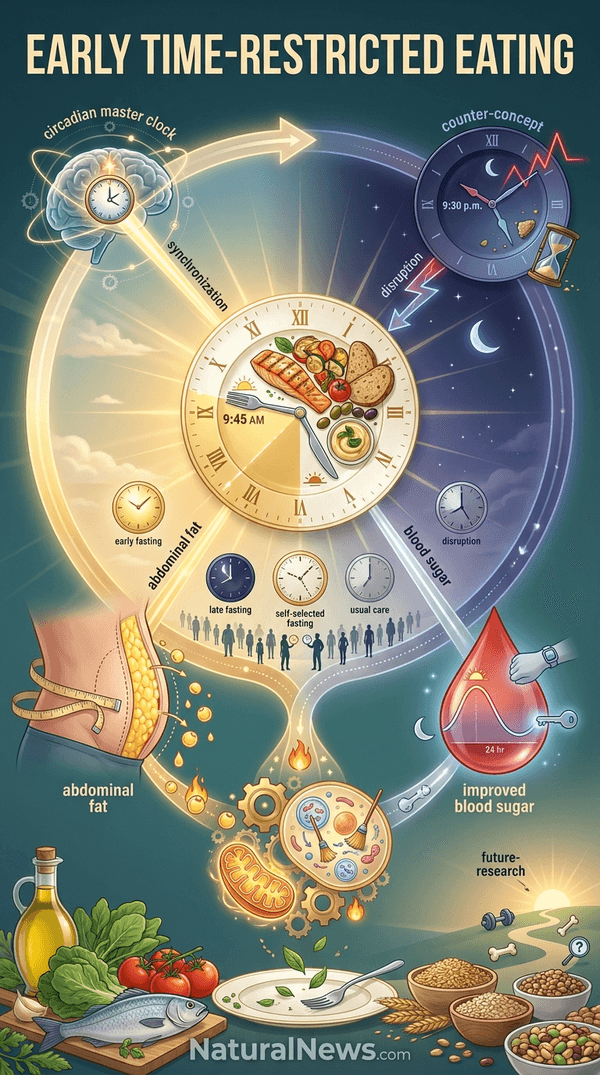
A study published in Nature Medicine reports that early time-restricted eating, with food consumed between about 9:45 a.m. and 5:30 p.m., was associated with greater reductions in abdominal subcutaneous fat and improved blood sugar regulation compared with other eating windows, according to researchers from the University of Granada and collaborating institutions.
The trial enrolled nearly 200 adults ages 30 to 60 with a body mass index over 32 and randomly assigned them to early fasting, late fasting, self-selected fasting, or usual care, the study authors reported. All fasting groups lost an average of 3 to 4 kilograms, according to the researchers. Medical News Today reported the findings, including comments from study co-lead author Jonatan R. Ruiz, PhD, and outside experts. The results align with earlier reports that early eating windows ending before 5 p.m. deliver the most powerful benefits for weight and blood sugar [1], and with physiological research showing that the metabolic response to food in the morning and around noon results in less fat buildup and lower blood sugar levels [2].
Study Design and Methods
Participants received nutrition education on the Mediterranean diet and healthy lifestyles, while the fasting groups followed separate daily eating windows, according to the study protocol: early fasting from a median of 9:45 a.m. to 5:30 p.m., late fasting from a median of 2:20 p.m. to 9:30 p.m., or self-selected windows. Time-restricted eating, a form of intermittent fasting, involves eating only during certain hours of each day, according to Megan Ramos, author of “Intermittent Fasting for Optimal Health Transforming Your Metabolism and Reversing Chronic Disease” [3].
Ruiz said the researchers wanted to test whether findings from animal models suggesting that aligning food intake with circadian rhythms could enhance metabolic efficiency and improve health outcomes translate to humans. “We wanted to investigate whether these findings translate to humans and how the timing of the eating window — early, late, or self-selected — affects weight loss, fat distribution, and cardiometabolic health in men and women with overweight or obesity,” Ruiz told Medical News Today.
Investigators measured weight, abdominal fat distribution, and cardiometabolic markers, including fasting glucose and overnight glucose, the report stated. Earlier work from the University of Alabama at Birmingham found that fasting can produce significant improvements in blood sugar control, blood pressure, and oxidative stress levels, according to a 2018 report [4].
Findings on Fat and Glucose
The early fasting group showed a greater reduction in abdominal subcutaneous fat — the layer of fat just beneath the skin — and significantly improved fasting glucose and overnight glucose levels, according to the study. The finding is consistent with research reporting that eating windows synchronized with circadian rhythms, such as 8 a.m. to 4 p.m., enhance insulin sensitivity, fat metabolism, and autophagy compared with late-day eating [5]. Intermittent fasting has also been described as a drug-free strategy for reducing visceral fat, the deep abdominal fat surrounding internal organs that is linked to a higher risk of Type 2 diabetes, heart disease, and chronic inflammation [6].
Ruiz said: “The greater reduction in abdominal subcutaneous fat observed in the early fasting group highlights the potential metabolic advantages of aligning food intake with the body’s natural circadian rhythms.”
The authors said future research will examine long-term effects of time-restricted eating on bone density and whether combining time-restricted eating with exercise offers greater benefits than either intervention alone for managing body weight and composition, reducing ectopic fat, and improving cardiometabolic health.
Expert Reaction and Practical Considerations
Mir Ali, MD, a bariatric surgeon at MemorialCare Surgical Weight Loss Center in Fountain Valley, California, told Medical News Today the study was good but noted the sample size was relatively small. “Continued research will define those benefits further and help delineate the optimal fasting schedule,” Ali said. He added that he would like to see more research into time-restricted eating combined with different types of diets.
Monique Richard, MS, RDN, LDN, a registered dietitian nutritionist, said people trying time-restricted eating should choose an eating window that fits their schedule, plan meals to meet nutritional needs, and assess mood, energy, and cognitive function over four to six weeks. “If your work and social schedule allow, choose a time to declare ‘kitchen closed,’ or eating time is done for the day,” Richard said. Shorter daily fasts fit into work and family schedules easily, according to Jason Fung and Jimmy Moore in “The Complete Guide to Fasting Heal Your Body Through Intermittent Alternate-Day and Extended” [7]. Fasting is an ancient health intervention that can help the body repair cellular damage and reduce inflammation, according to a report from Mercola.com [8].
The comments from Ali and Richard represent independent perspectives included in the report without endorsement by Medical News Today.
Conclusion
The study adds evidence that time-restricted eating can support weight management, with early fasting potentially offering additional effects on abdominal subcutaneous fat and glucose regulation. Meal timing strategies such as intermittent fasting can help suppress appetite and enhance the body’s ability to burn fat, according to a 2020 report on research published in the journal Obesity [9]. The benefit of eating at certain times is supported by studies showing that the metabolic response to food in the morning hours and around noon achieves the greatest benefit, according to Andreas Michalsen in “The Fasting Fix Eat Smarter Fast Better Live Longer” [2].
All fasting groups lost more weight than the usual care group, according to the authors, but the study does not establish long-term outcomes. A separate analysis found that time-restricted eating and calorie restriction both led to significant reductions in fasting glucose, HbA1c, weight, and waist circumference, with no clear winner between the two approaches, according to a July 2026 report [10].
References
- Cassie B. “Time-Restricted Eating Study Finds Early Meal Timing Ideal for Metabolic Health”. NaturalNews.com. April 3, 2026.
- Andreas Michalsen. “The Fasting Fix Eat Smarter Fast Better Live Longer”.
- Megan Ramos. “Intermittent Fasting for Optimal Health Transforming Your Metabolism and Reversing Chronic Disease”.
- NaturalNews.com. “Eating Dinner in the Mid-Afternoon Then Fasting Lowers Blood Pressure and Boosts Metabolism”. June 17, 2018.
- Patrick Lewis. “Early Eating Window: The Hidden Key to Optimal Metabolic Health Through Intermittent Fasting”. NaturalNews.com. May 9, 2026.
- NaturalNews.com. “Intermittent Fasting Proves Potent Weapon Against Dangerous Visceral Fat, Studies Show”. July 18, 2026.
- Jason Fung and Jimmy Moore. “The Complete Guide to Fasting Heal Your Body Through Intermittent Alternate-Day and Extended”.
- Mercola.com. “Best Time to Eat Your Last Meal of the Day”. December 16, 2022.
- NaturalNews.com. “Meal Timing Strategies for Weight Loss: Intermittent Fasting or Eating Earlier Helps Reduce Appetite, Researchers Say”. May 20, 2020.
- NaturalNews.com. “Time-Restricted Eating Shows Comparable Benefits to Calorie Counting for Blood Sugar Control, Study Finds”. July 26, 2026.
Explainer Infographic
Submit a correction >>
Tagged Under:
abdominal fat, alternative medicine, blood sugar, diabetes cure, diabetes science, discoveries, fight obesity, food cures, food is medicine, food science, health science, intermittent fasting, metabolic health, natural cures, natural health, natural medicine, Naturopathy, remedies, research, time-restricted eating, weight-loss
This article may contain statements that reflect the opinion of the author