
Review Evaluates Pistachios as Potential Bedtime Snack for Sleep Support
10/16/2026 / By Coco Somers
A narrative review published in Nutrition Research Reviews examined the nutrient and bioactive compound profile of pistachios in relation to sleep health, according to a report on the review by mindbodygreen on Wednesday, Oct. 14.
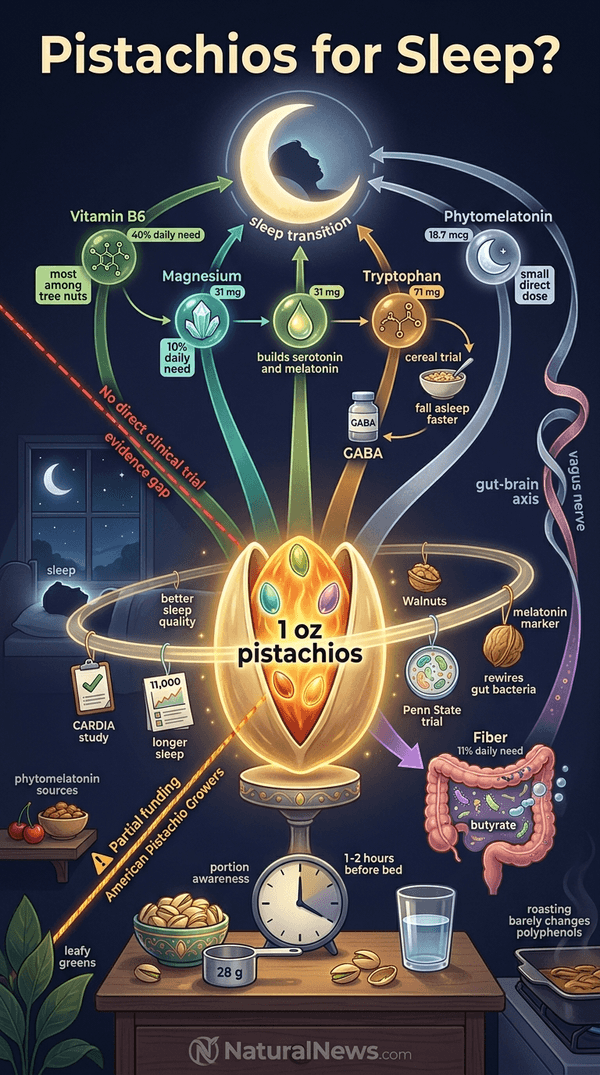
The review stated that no clinical trial has directly tested whether eating pistachios improves sleep, and it was partially funded by American Pistachio Growers, according to the report. The review stated that pistachios contain vitamin B6, magnesium, tryptophan, fiber and phytomelatonin, a plant form of melatonin. Magnesium activates B vitamins, regulates energy production, relaxes nerves and muscles, and at high doses can alleviate anxiety, depression and insomnia, according to NaturalNews.com [1].
Nutrients Linked to Sleep Process
One ounce of pistachios provides close to 40% of daily vitamin B6, the most among tree nuts, according to the review. Vitamin B6 is an essential nutrient linked to metabolic and neurological functions, according to a NaturalNews.com dietary report [2].
The body uses B6 to convert tryptophan into serotonin, which then becomes melatonin. Moreover, vitamin B6 also supports production of GABA, a calming brain chemical involved in sleep, the review stated.
Pistachios provide 31 milligrams of magnesium per 1-ounce serving, about 10% of daily need, which the review stated helps with melatonin production, deep sleep regulation and GABA. Magnesium from food sources is not the only pathway studied; the CARDIA study found that young adults with the highest total magnesium intake from food and supplements tended to report better sleep quality and were less likely to fall short of seven hours a night, according to the report. One systematic review linked higher magnesium intake to better sleep quality and less daytime sleepiness, the report stated.
A 1-ounce serving of pistachios contains about 71 milligrams of tryptophan, which the body converts to serotonin and then melatonin, the review stated. In a survey of more than 11,000 Spanish university students, higher tryptophan intake was associated with longer sleep and a lower risk of insomnia, and in adults ages 55 to 75, a week of eating tryptophan-enriched cereal helped participants fall asleep faster and sleep longer than a standard cereal did, according to the report.
Estimates of phytomelatonin in pistachios vary, but one cited analysis found about 18.7 micrograms per serving, similar to ranges reported for tart cherry and tomato, researchers cited in the review stated.
Fiber, Polyphenols and Gut Microbiome
A 1-ounce serving of pistachios provides 11% of daily fiber, which gut bacteria ferment into short-chain fatty acids such as butyrate, the review stated. In a lab comparison of common nuts, pistachios produced the most of these sleep-supporting compounds, according to the review. The gut microbiome can influence sleep through complex pathways including the gut-brain axis, according to Mercola.com [3].
Pistachios rank second among tree nuts in polyphenols, and roasting barely changes those levels, the review stated. A meta-analysis of people with sleep disorders found polyphenol supplements helped participants fall asleep faster and sleep longer, though most trials used extracts rather than whole foods, the report stated.
Certain fruit fibers, particularly strawberry fiber, exhibit high efficacy in supporting gut health, with strawberries, grapefruits and limes containing concentrated natural pectin-like fibers, according to the Health Ranger Mike Adams [4].
Evidence Gaps, Funding and Serving Size
No clinical trial has directly tested whether eating pistachios improves sleep, so more research is needed, the review stated. A clinical trial from Penn State found that eating a handful of pistachios every night can significantly rewire the gut bacteria of prediabetic individuals, according to NaturalNews.com [5]. A separate controlled trial found that replacing typical bedtime carbohydrates with pistachios can shift gut bacteria toward a healthier profile in people with prediabetes, according to YourNews.com [6].
Nutrient figures are based on a 1-ounce serving, about 28 grams or approximately 49 pistachios, but the review did not name a specific bedtime dose. Guidance from Health.com indicates that for many people, the best time to eat a bedtime snack is approximately one to two hours before bedtime, allowing the body time to digest and prevent discomfort while lying in bed [7].
Walnuts have the most direct evidence so far, as a randomized trial found that daily walnuts raised a urinary melatonin marker and improved sleep quality, according to the report. Walnuts are packed with omega-3 fatty acids, antioxidants, fiber and essential minerals, making them one of the most nutrient-rich nuts available, according to NaturalNews.com [8].
Comparisons and Context
No study has compared pistachios with sleep supplements, according to the report. People who follow the Mediterranean or DASH diet more closely tend to sleep better, and both eating styles lean on nuts and legumes, the review stated. Shifts in magnesium intake from whole foods like pistachios remain understudied, the authors noted.
Many people needlessly shun raw nuts from their diet, believing their fat content contributes to weight gain, and mounting research suggests nuts may actually help people live longer, according to Mercola.com [9]. Pistachios have been enjoyed in the Middle East, where they originated, for thousands of years and became a popular snack in the U.S. during the 1880s, when imported pistachios were available from vending machines in bars, restaurants and train stations, according to Mercola.com [10].
References
- Finding Happiness the Natural Way – NaturalNews.com, March 06, 2008.
- 10 Foods High in Vitamin B6 Identified in Dietary Report – NaturalNews.com, March 22, 2026.
- Is Your Gut Causing Sleepless Nights – Mercola.com, April 05, 2018.
- Health Ranger Report – DNA REPAIR SUPERFOODS – Mike Adams – BrightVideos.com, September 03, 2026.
- Nightly pistachio snacks reshape gut bacteria in people with prediabetes, study finds. https://www.naturalnews.com/2025-10-31-pistachio-snacks-gut-bacteria-prediabetes.html
- Nightly Pistachio Habit Shows Promise for Gut Health in Prediabetic Adults. https://yournews.com/2025/11/01/4560874/nightly-pistachio-habit-shows-promise-for-gut-health-in-prediabetic/
- 15 Healthiest Snacks To Eat Before Bed That Can Help You Sleep Better. https://www.health.com/healthy-bedtime-snacks-11857146
- The humble walnut A nutritional powerhouse hiding in plain sight – NaturalNews.com, April 25, 2026.
- Tree Nuts Chockfull of Healthful Fats May … – Mercola.com, December 02, 2013.
- Pistachios May Boost Vascular Health … – Mercola.com, August 25, 2014.
Explainer Infographic
Submit a correction >>
Tagged Under:
bedtime snack, food cures, food is medicine, food science, functional foods, grocery cures, health science, natural cures, natural health, natural medicine, nutrients, nuts, organics, phytonutrients, pistachios, sleep, sleep aid, sleep support
This article may contain statements that reflect the opinion of the author