
Silent Inflammation Can Damage Tissues; Five Lifestyle Habits May Help, Expert Says
10/20/2026 / By Coco Somers

Inflammation is a natural immune response that helps protect the body from injury and infection, according to the National Institutes of Health. When that response persists, however, it can become chronic and damage healthy tissues, the agency stated. The NIH has linked chronic inflammation to conditions including rheumatoid arthritis, lupus, inflammatory bowel disease and cardiovascular disease.
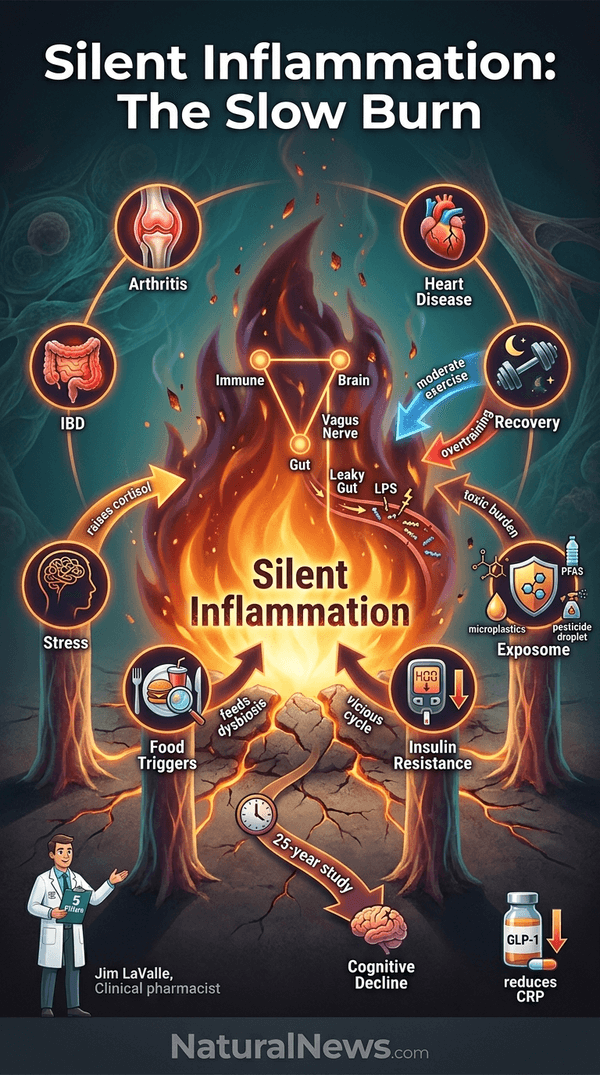
Jim LaValle, a clinical pharmacist and metabolic medicine expert based in Texas, told Fox News Digital that inflammation can be influenced by factors beyond injury or infection. LaValle pointed to the gut-immune-brain connection, described as communication between gut microbes, the immune system and the central nervous system, as one pathway that can influence the body’s inflammatory response.
According to the NIH, chronic inflammation can contribute to serious diseases over time. LaValle said several everyday lifestyle factors can play a role in preventing it, including stress management, food trigger awareness, blood sugar control, environmental exposure awareness and recovery from exercise.
Stress Management and Food Triggers Cited as First Two Habits
LaValle said managing stress and anxiety can help support the gut-brain connection and keep inflammation in check. He pointed to cortisol, a hormone released in response to stress, and said elevated levels can affect body chemistry. Chronic stress can affect the intestinal barrier, potentially allowing substances that normally remain inside the gut to pass through more easily, LaValle said; this increased intestinal permeability is sometimes called leaky gut. He added that stress can make a person more prone to irritable bowel and can trigger or worsen digestive symptoms in some people.
For the second habit, LaValle said diets high in sugar, fat and ultra-processed foods can affect gut health, and paying attention to food triggers may help identify sensitivities or intolerances. Symptoms such as bloating, rashes or discomfort after eating certain foods may signal a food-related reaction, although they can have other causes, according to LaValle. He said certain medications, including antibiotics, may also alter the gut microbiome, but their effects vary depending on the drug and the individual.
Blood Sugar Control and Environmental Exposures Named as Habits Three and Four
LaValle said maintaining healthy blood sugar levels is another important factor in managing inflammation. He noted that conditions such as diabetes and insulin resistance are often associated with chronic inflammation. Research suggests that GLP-1 medications, commonly prescribed for Type 2 diabetes and obesity, may have anti-inflammatory effects, while scientists are investigating other potential benefits beyond weight loss and blood sugar control, according to LaValle.
For the fourth habit, LaValle pointed to the exposome, or the environmental exposures people experience throughout their lives, which the NIH says can influence inflammation and the risk of chronic disease. LaValle cited emerging research on environmental exposures including forever chemicals, microplastics, metals and pesticides and how they may affect weight, blood sugar regulation and other aspects of health. A 2025 report in NaturalNews described research linking glyphosate and industrial seed oils to leaky gut, systemic inflammation and neuroinflammation, with glyphosate described as exacerbating neuroinflammation and metabolic dysfunction through gut-toxin infiltration [1].
“A lot of us do not think about that kind of impact on our health and how that could trigger inflammation signaling,” LaValle said.
Overtraining Without Recovery May Contribute to Silent Inflammatory Signaling
LaValle cautioned that regular exercise supports overall health, but intense workouts without adequate recovery time can put additional stress on the body. He identified avoiding overtraining as the fifth habit. “You are not getting a good enough recovery. You are training hard. And, in fact, you might be training hard every day to lower that cortisol, but you are not getting good recovery. And that could lead to silent inflammatory signaling as well,” LaValle said.
The relationship between stress, recovery and inflammation has been documented in clinical research. A 25-year follow-up from the Honolulu-Asia Aging Study published in Annals of Neurology in 2002 measured high-sensitivity C-reactive protein from blood taken 25 years before dementia assessment, with the interval described as long enough to make it unlikely that dementia was present at the time of the blood draw [2].
Medical Consultation Recommended for Persistent Symptoms
The NIH states that chronic inflammation can damage healthy tissues and contribute to serious diseases over time. LaValle told Fox News Digital that several everyday lifestyle factors can play a role in preventing chronic inflammation, including stress management, food trigger awareness, blood sugar control, environmental exposure awareness and recovery from exercise. No single habit guarantees prevention, and symptoms that persist should be evaluated by a medical professional, according to the experts cited.
The information was attributed to the National Institutes of Health and to LaValle, a clinical pharmacist and metabolic medicine expert based in Texas. Research continues into how chronic inflammatory signaling affects tissue over time. A 2007 study in Neurourology and Urodynamics found that bladder dysfunction persisted in female rats following resolution of colitis, with the authors noting that such responses need to be studied in greater detail and in male rats to determine whether they are sex specific [3].
References
- Hidden toxins in food Glyphosate and seed oils linked to leaky gut brain damage and systemic inflammation – NaturalNews.com, September 04, 2025.
- Early Inflammation and Dementia: A 25-Year Follow-up of the Honolulu-Asia Aging Study by XPP. Ann Neurol 2002;52:168–174
- Enhanced Expression of Mast Cell Growth Factor and Mast Cell Activation in the Bladder Following the Resolution of Trinitrobenzenesulfonic Acid (TNBS) Colitis in Female Rats by John Wiley. Neurourology and Urodynamics 26:887–893 (2007)
Explainer Infographic
Submit a correction >>
Tagged Under:
alternative medicine, blood sugar, diet, environment, exercise, habits, health science, immune system, inflammation, mental health, Mind, mind body science, natural cures, natural health, natural medicine, Naturopathy, remedies, stress management, tips
This article may contain statements that reflect the opinion of the author