
Study: Late-Night Eating Linked to Higher Risk of Fatty Liver Disease and Cirrhosis
10/21/2026 / By Coco Somers
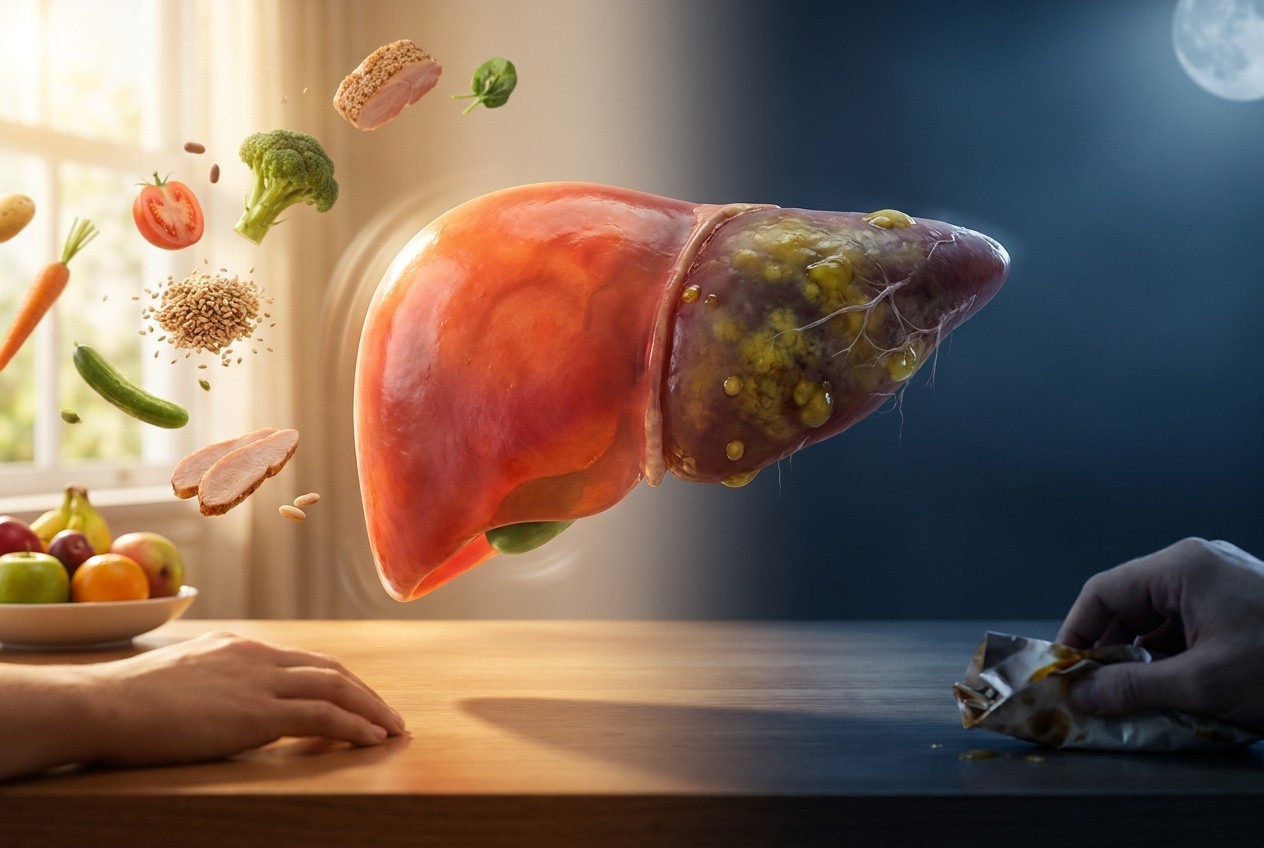
A new study has found that eating late at night is linked to a higher risk of developing fatty liver disease and cirrhosis.
Researchers from Oregon Health & Science University collaborated with counterparts from Massachusetts General Hospital for the analysis, according to a NaturalHealth365 piece about the study [1]. The analysis examined data from nearly 200,000 adults participating in three long-running American health studies [2].
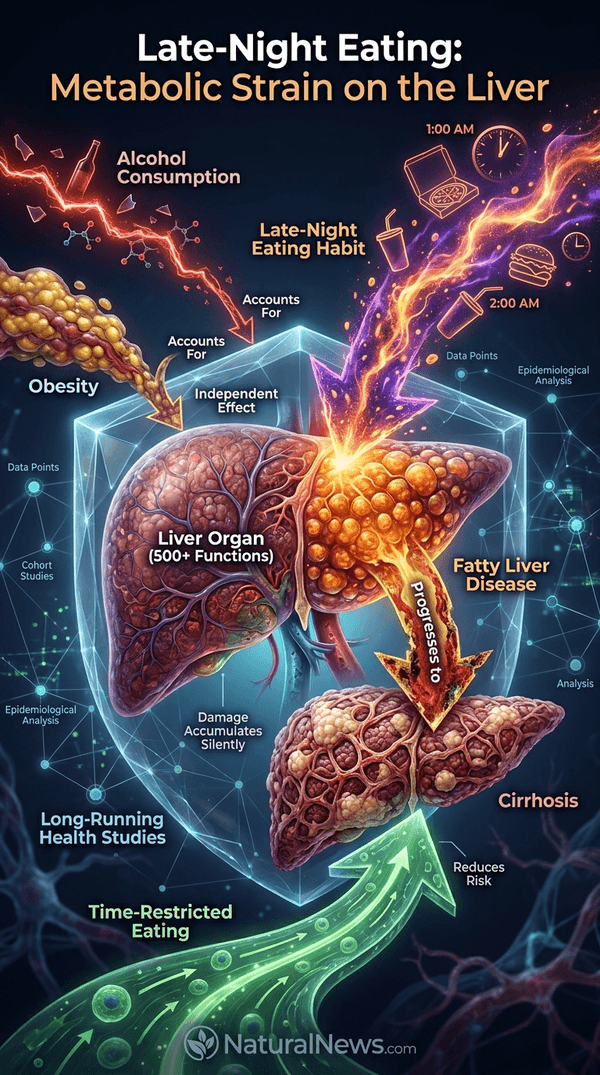
According to the report, individuals who routinely ate after dinner or around bedtime faced a 20% to 30% higher risk of liver disease compared with those who did not [1]. That category included fatty liver disease, which affects up to 30% of American adults, and cirrhosis, the severe scarring that represents a later stage of disease [1][3].
The work was funded by a liver research foundation, with no food or drug company involved, according to the report [3]. Researchers wrote that the effects of late-evening food intake on liver disease should be further studied in diverse populations, incorporating liver imaging and markers of liver disease severity [4].
Study Examined Eating Habits of Nearly 200,000 Adults
Participants in the three long-running health studies described their eating habits, including whether they regularly ate after dinner or around bedtime, according to the published findings [1]. The data set, encompassing nearly 200,000 adults, provided the basis for the association reported by the research team [2].
The study appeared in Clinical Gastroenterology and Hepatology, a peer-reviewed journal, after review by independent experts in the field [4]. According to the report, fatty liver disease often progresses for years without a single noticeable symptom, a characteristic that researchers said contributes to underdiagnosis [1].
Cirrhosis, described in the report as the severe scarring of later disease, represents the advanced end of the spectrum of chronic liver conditions [1][3]. The study’s authors noted that the findings warrant additional investigation across diverse populations, using imaging and severity markers to confirm the relationship [4].
Liver Function Follows Daily Circadian Rhythm
According to researchers, every organ in the body follows a daily rhythm, and the liver is especially sensitive to timing. During waking hours, the liver processes nutrients, balances blood sugar and stores energy. As bedtime approaches, the body shifts toward rest and repair rather than digestion.
When food arrives late, the liver must process calories at a time when the body handles them poorly, the researchers said. That inefficiency can contribute to weight gain, blood sugar problems and poor liver health, according to the report [1]. The findings point to a simple, free step: Changing when one eats, rather than overhauling the diet.
References
- Late Night Eating Linked To Liver Disease | NaturalHealth365. https://www.naturalhealth365.com/overlooked-eating-mistake-linked-to-fatty-liver-disease-and-cirrhosis.html
- Scientists Link Higher Liver Disease Risk to One Common Late-Night …. https://www.mensjournal.com/health/scientists-link-higher-liver-disease-risk-to-one-common-late-night-habit
- Overlooked eating mistake linked to fatty liver disease and cirrhosis. https://beforeitsnews.com/health/2026/10/overlooked-eating-mistake-linked-to-fatty-liver-disease-and-cirrhosis-3071966.html
- One Common Eating Habit Is Linked to Higher Risk of 2 Liver Diseases. https://www.sciencealert.com/one-common-eating-habit-is-linked-to-higher-risk-of-2-liver-diseases
Explainer Infographic
Submit a correction >>
Tagged Under:
circadian rhythm, cirrhosis, discoveries, fatty liver disease, food science, health science, late-night eating, liver function, liver health, meal timing, metabolic health, research
This article may contain statements that reflect the opinion of the author