
Formaldehyde’s hidden health toll and its persistent presence in modern life
10/22/2026 / By Ava Grace
- Formaldehyde is a versatile industrial chemical found in many household and construction materials (like composite wood, fabrics and disinfectants), but it is also a potent gas that is a natural byproduct in the human body and some foods.
- Exposure causes immediate irritation (eyes, nose, throat) and can worsen asthma. Critically, it is classified as a known human carcinogen, linked to nasal and lung cancers and leukemia from chronic, elevated exposure.
- The health effects are not due to a deficiency but from direct tissue damage. Formaldehyde acts as a toxin by irritating tissues and binding to DNA and proteins, which can cause mutations and cancer.
- The main concern is indoor air pollution from products like plywood and particleboard. U.S. regulation has been slow, with significant standards (like the 2010 Formaldehyde Standards Act) only recently limiting emissions from composite wood products.
- Formaldehyde’s history exemplifies a common regulatory failure: chemicals were integrated widely into consumer goods before their long-term health risks were fully understood, leading to decades of public exposure before protective measures were enacted.
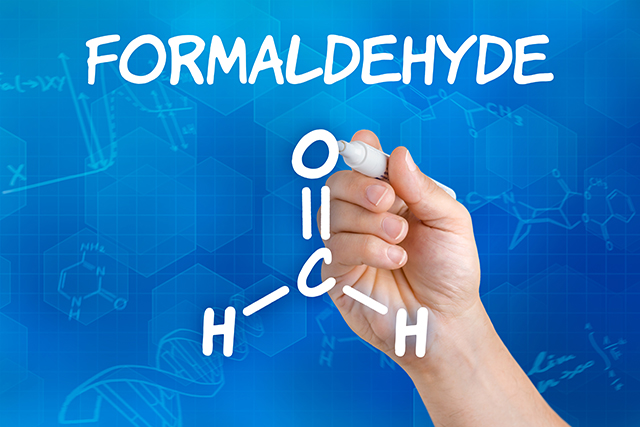
Formaldehyde, a pungent, colorless gas known scientifically as CH?O, is a paradoxical presence in the modern world. It is both a naturally occurring compound in the human body and a potent industrial workhorse, found in everything from plywood and permanent-press fabrics to disinfectants and laboratory preservatives.
However, its widespread use belies a significant public health concern, as major agencies classify it as a human carcinogen linked to respiratory cancers. Understanding its sources, health impacts and regulatory history is crucial for informed consumer choices and public health advocacy.
A chemical of many faces
At room temperature, formaldehyde is a gas with a strong, suffocating odor. It is highly soluble in water, often sold as a 37% solution called formalin. Its utility stems from its reactivity; it binds and preserves, making it invaluable for creating durable resins in composite wood products like particleboard and plywood. These urea-formaldehyde resins are significant sources of indoor air emissions. Beyond construction, it serves as a preservative in mortuaries and medical labs, a disinfectant and a component in some household products.
Health impacts: From irritation to carcinogenesis
The health effects of formaldehyde exposure are dose-dependent and vary by individual sensitivity. Acute exposure, even at low levels, commonly causes irritation of the eyes, nose and throat, leading to watery eyes, burning sensations, coughing and nausea. Headaches and skin rashes are also frequently reported. For individuals with conditions like asthma or chronic obstructive pulmonary disease (COPD), exposure can worsen symptoms, triggering severe bronchoconstriction and breathing difficulties.
The more grave concern is chronic exposure to elevated levels. In 2004, the International Agency for Research on Cancer (IARC) classified formaldehyde as a known human carcinogen, based on sufficient evidence linking it to nasopharyngeal cancer and leukemia. The National Toxicology Program in the United States concurs, listing it as a known human carcinogen. Prolonged, high-level exposure, historically seen in certain industrial settings, is associated with an increased risk of cancers in the nasal passages and lungs.
The deficiency misconception and direct harms
It is critical to clarify a point often misunderstood in wellness circles: formaldehyde does not cause a nutritional or hormonal “deficiency” in the body. Rather, it is an exogenous toxin that causes direct harm. Its primary mechanism of injury is through direct irritation and its ability to bind to proteins and DNA, causing cellular damage and genetic mutations that can lead to cancer. The symptoms experienced are not from a lack of a vital compound but from the active, destructive presence of the chemical itself on tissues.
Dietary exposure: A minor route with major scrutiny
Formaldehyde occurs naturally in small amounts in many foods, including fruits, vegetables, meats and seafood. It is also a natural metabolic byproduct in the human body. The more significant concern is its illegal use as a preservative to extend shelf life, a practice reported in some international food supplies. Foods potentially subject to adulteration include certain imported fish, dairy products and dried goods. However, in nations with robust food safety systems like the United States, deliberate addition is prohibited. The FDA and USDA monitor for its illicit use, and the primary dietary risk remains naturally occurring levels, which are generally considered safe.
Regulatory history and the role of agencies
Formaldehyde’s use dates back to the late 19th century, with its preservation properties revolutionizing embalming and its resins enabling the mass production of affordable furniture and building materials in the 20th century. Its regulation has been a slow, contested process, evolving as scientific evidence of its toxicity accumulated. The U.S. Food and Drug Administration (FDA) does not “allow” formaldehyde as a food additive. It prohibits its intentional addition to food. The FDA does, however, regulate its use in certain consumer products like hair straighteners and approves its use in some materials that contact food, setting strict limits.
Its presence in indoor air is regulated indirectly. In 2010, the U.S. Congress passed the Formaldehyde Standards for Composite Wood Products Act, which directed the Environmental Protection Agency (EPA) to establish limits on emissions from plywood, particleboard and other composite woods. These standards took full effect in 2023, mandating lower-emitting products for sale in the U.S. This regulatory journey highlights a recurring theme in environmental health: scientific discovery of harm often precedes protective regulation by decades, during which public exposure continues.
Mitigation and consumer awareness
Given that indoor air is a primary exposure source, mitigation strategies focus on ventilation, especially in new buildings or after installing new cabinetry or flooring. Choosing solid wood furniture or products certified as low-emitting (like those meeting CARB Phase 2 or EPA TSCA Title VI standards), using air purifiers with appropriate filters and maintaining moderate temperature and humidity can reduce concentrations. Awareness of product labels and material safety data sheets is empowering for consumers.
Historical context and contemporary relevance
The story of formaldehyde is a microcosm of the broader challenge of regulating industrial chemicals. For much of the 20th century, chemicals were integrated into commerce with limited pre-market safety testing. Only after widespread population exposure did the long-term health effects, like cancer, become apparent through occupational studies and epidemiological research. This pattern—seen with asbestos, lead, and PFAS “forever chemicals”—forces a reckoning with the cost of convenience and affordability.
Today, the issue remains urgent. The drive for affordable housing and furniture continues to rely on composite woods, even as safer resins are developed. Global supply chains can introduce non-compliant products into markets. Furthermore, the proliferation of online information has led to both heightened public awareness and the spread of misinformation, underscoring the need for credible, science-based health communication.
The persistent presence of formaldehyde in daily environments serves as a stark reminder of the complex trade-offs in a material world and the enduring necessity of vigilant, science-driven public health policy to safeguard long-term well-being.
Watch and learn from Health Ranger Mike Adams as he discusses the invisible chemical warfare in our lives.
This video is from the BrightLearn channel on Brighteon.com.
Sources include:
Submit a correction >>
Tagged Under:
asthma, chemical violence, COPD, Dangerous, Ecology, embalming, environment, formaldehyde, health science, industrial chemical, poison, toxic chemicals, toxic ingredients, toxins
This article may contain statements that reflect the opinion of the author