
Nutrition Scientist Outlines Three-Tier Framework for Healthful Eating
10/22/2026 / By Coco Somers
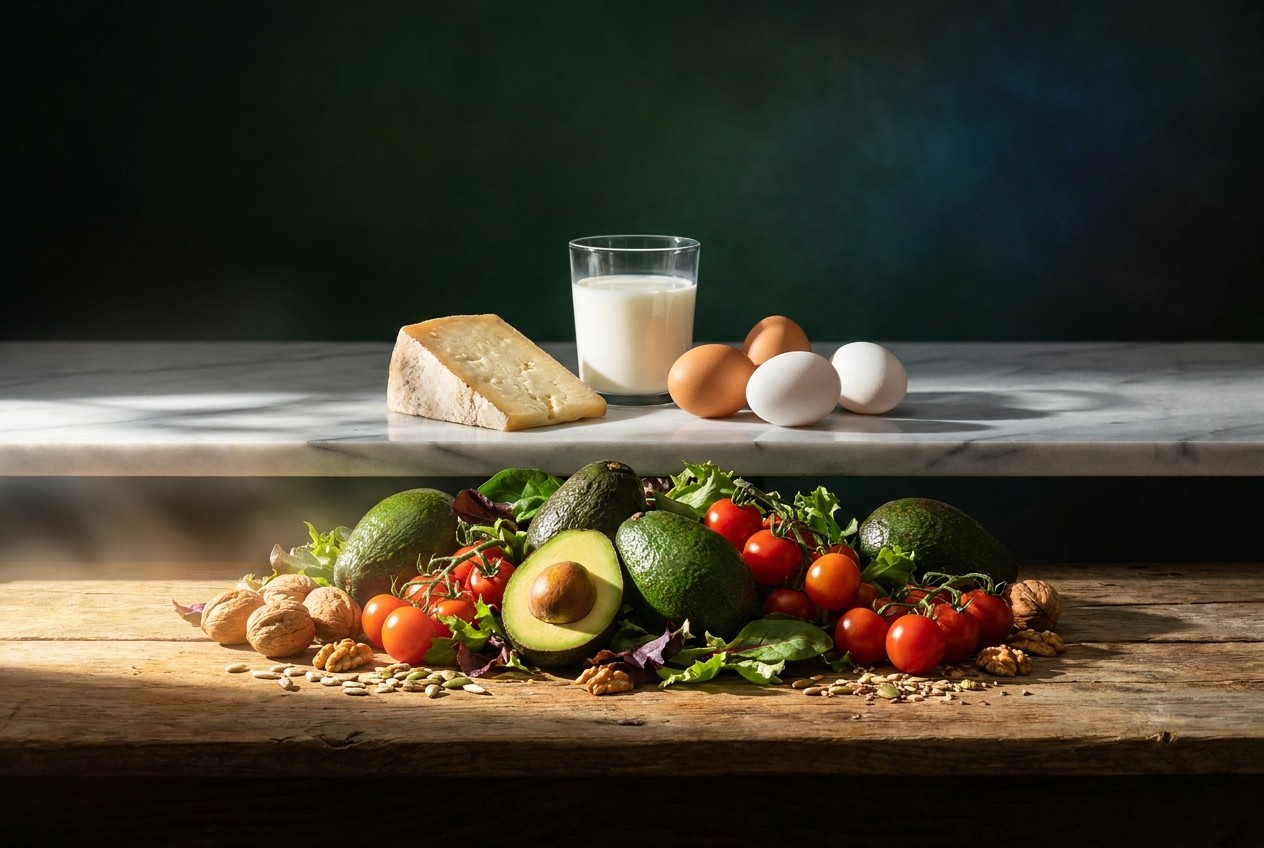
Dariush Mozaffarian, MD, DrPH, a physician and nutrition scientist, has outlined a three-tier framework for healthful eating in his book “Food Is Medicine,” published by Henry Holt. An excerpt of the book was published by mindbodygreen on October 20, 2026. In the excerpt, Mozaffarian writes that competing and often contradictory rules about calories, carbohydrates, fat and processed foods make dietary choices unnecessarily complicated for the public.
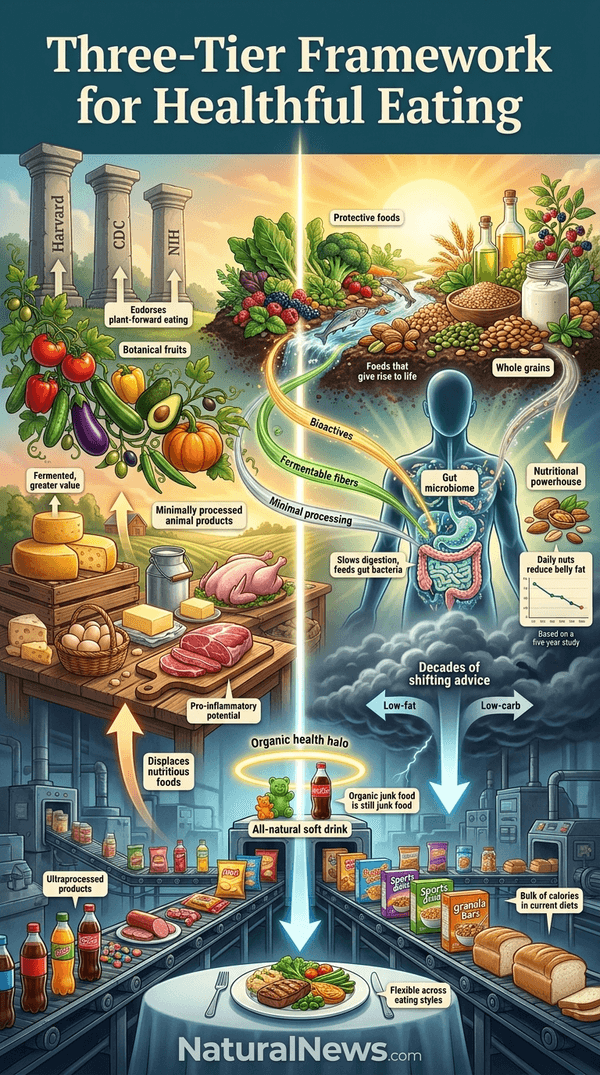
According to the excerpt, Mozaffarian proposes that people consider foods along a spectrum rather than focusing only on what to avoid. He writes that this approach places nourishment, rather than restriction, at the center of eating well. The framework groups foods into three tiers, with protective foods at the top, minimally processed animal products in the middle, and ultra-processed products at the bottom.
Mozaffarian’s framework arrives amid ongoing public confusion about nutrition.
Protective Foods Form Top Tier, Scientist Says
Mozaffarian identifies the top tier as protective foods, a category that includes fruits, nuts, seeds, vegetables, beans, whole grains, plant oils, fish and yogurt. He describes them in the excerpt as ‘foods that give rise to life,’ noting that when planted they grow into new plant life.
Many vegetables in this group are botanically fruits because they contain seeds, according to Mozaffarian. He lists tomatoes, cucumbers, bell peppers, zucchini, eggplant, avocado, olives, okra and pumpkin as examples. He writes that these foods evolved over millions of years to nurture seedlings and also benefit humans who consume them.
The classification is consistent with broad expert consensus that plant-forward eating patterns are associated with better health outcomes. Harvard’s Nutrition Source recommends eating mostly vegetables, fruit and whole grains, along with healthy fats and healthy proteins, and drinking water instead of sugary beverages [1]. The CDC similarly advises focusing on whole, nutrient-dense foods that emphasize protein, dairy, vegetables, fruits, healthy fats and whole grains [2].
Intermediate and Lowest Tiers: Animal Products and Ultra-processed Foods
The middle tier consists of minimally processed animal products such as cheese, poultry, milk, eggs, butter and unprocessed red meat, Mozaffarian states. He says these foods contain important nutrients but lack the same wealth of bioactives found in top-tier foods.
According to the excerpt, cheese is a fermented choice with greater value, while unprocessed red meat falls lower within the tier due to pro-inflammatory and carcinogenic potential that must be balanced against other benefits. Mozaffarian writes that the tier structure is not a simple good-versus-bad binary but a spectrum of relative nutritional value.
The lowest tier includes sweetened beverages, processed meats and other ultra-processed products with refined grains, starches, salt and chemical additives, according to the excerpt. Mozaffarian writes that these products provide the bulk of calories in current diets. Examples he lists include fast food, candy, potato chips, sugary cereals, some low-fat deli meats, sports and energy drinks, granola bars, and many zero-sugar refined breads, rice, crackers and cereals.
The tiering of ultra-processed foods aligns with broader public health messaging. The CDC’s healthy eating guidance emphasizes whole, nutrient-dense foods and encourages Americans to make dietary choices that support overall health [2]. Mozaffarian’s framework places such products at the bottom of the spectrum while acknowledging that they remain a dominant source of calories in the contemporary food supply.
Natural or Organic Labels Are Not Foolproof, Scientist Says
Mozaffarian writes that prioritizing ‘natural’ ingredients is not a guarantee of health, because an all-natural soft drink or refined breakfast cereal can still promote obesity. He states that choosing organic reduces exposure to synthetic pesticides but does not eliminate risks from organic pesticides, and that organic junk food remains junk food.
At the 2018 Partnership for a Healthier America conference in Washington, D.C., Mozaffarian said he watched a Los Angeles start-up unveil a television advertisement featuring organic gummy bears. He questioned whether that product addressed a major food crisis. The excerpt uses the anecdote to illustrate how marketing language can obscure the nutritional quality of a product.
Mozaffarian concludes that simple labels or rules may steer people in the wrong direction and that a nuanced, fact-based understanding of nutrition is important. His position echoes concerns raised by other nutrition researchers that consumers should look beyond front-of-package claims and consider the overall composition of their diets [3].
Three Qualities of Protective Foods; Nuts and Seeds Highlighted
Mozaffarian attributes the health effects of protective foods to three qualities: high levels of bioactives such as polyphenols, flavones, flavonoids, isoflavones and carotenoids; abundant fermentable fibers; and minimal processing. He says bioactives offer antioxidant, anti-inflammatory and pro-immune benefits, while fermentable fibers support the gut microbiome and are metabolized into beneficial signaling molecules.
The intact natural structure of these foods slows digestion, facilitates steady nutrient uptake and diverts more calories to gut bacteria, according to Mozaffarian. He calls nuts and seeds nutritional powerhouses gram for gram, including unsweetened nut butters. He cites long-term observational studies and shorter-term trials indicating that people who eat more nuts gain less weight over time.
A large five-year intervention confirmed that daily nut consumption reduces belly fat and waist size, Mozaffarian writes. The finding is consistent with the broader scientific literature on plant-forward eating patterns. The NIH News in Health notes that eating a balanced diet helps ensure the body gets all the nutrients it needs, and that food provides energy and nutrients essential for health [4]. Harvard’s Nutrition Source similarly recommends healthy oils such as olive and canola for cooking and at the table, while limiting butter and avoiding trans fat [5].
Scientist Recommends Building Meals Around Protective Foods
Mozaffarian states the takeaway is not to follow a single rigid food rule but to build more meals around protective foods. He says other choices fall along a spectrum and that the approach places nourishment, rather than restriction, at the center of eating well.
References
- What Should I Eat? – The Nutrition Source. https://nutritionsource.hsph.harvard.edu/what-should-you-eat/
- Healthy Eating Tips | Nutrition. https://www.cdc.gov/nutrition/features/healthy-eating-tips.html
- What science says about the best way to eat…. https://www.nbcnews.com/better/lifestyle/what-science-says-about-best-way-eat-what-we-re-ncna1104911
- Breaking Down Food – NIH News in Health. https://newsinhealth.nih.gov/2023/08/breaking-down-food
- Diet Reviews – The Nutrition Source – Harvard University. https://nutritionsource.hsph.harvard.edu/healthy-weight/diet-reviews/
Explainer Infographic
Submit a correction >>
Tagged Under:
#nutrition, DASH diet, diet, food science, fruits, health science, Mediterranean diet, men's health, nutrients, older adults, organics, research, Veggies, visceral fat, Whole Foods, whole grains, women's health
This article may contain statements that reflect the opinion of the author