Compound Found to Enhance Muscle Repair Signal, May Counter Age-Related Loss
07/30/2026 / By Petra Stone

Researchers at Kyushu University have identified a sulfur-based compound that may protect and enhance a protein key to muscle repair, offering a potential new approach to counter age-related muscle loss, according to a study published in July 2026.
The compound, lipoic acid trisulfide (LASSS), increased the binding ability of hepatocyte growth factor (HGF) to muscle stem cells by more than two-fold in laboratory experiments, the researchers reported. Muscle deterioration, known as sarcopenia, affects an estimated 10% to 25% of adults under age 70 and half of those over age 80, according to previous reports cited in the study [1]. The finding suggests a molecular mechanism underlying age-related muscle decline that could lead to new therapeutic strategies, the researchers said.
The Role of HGF in Muscle Repair
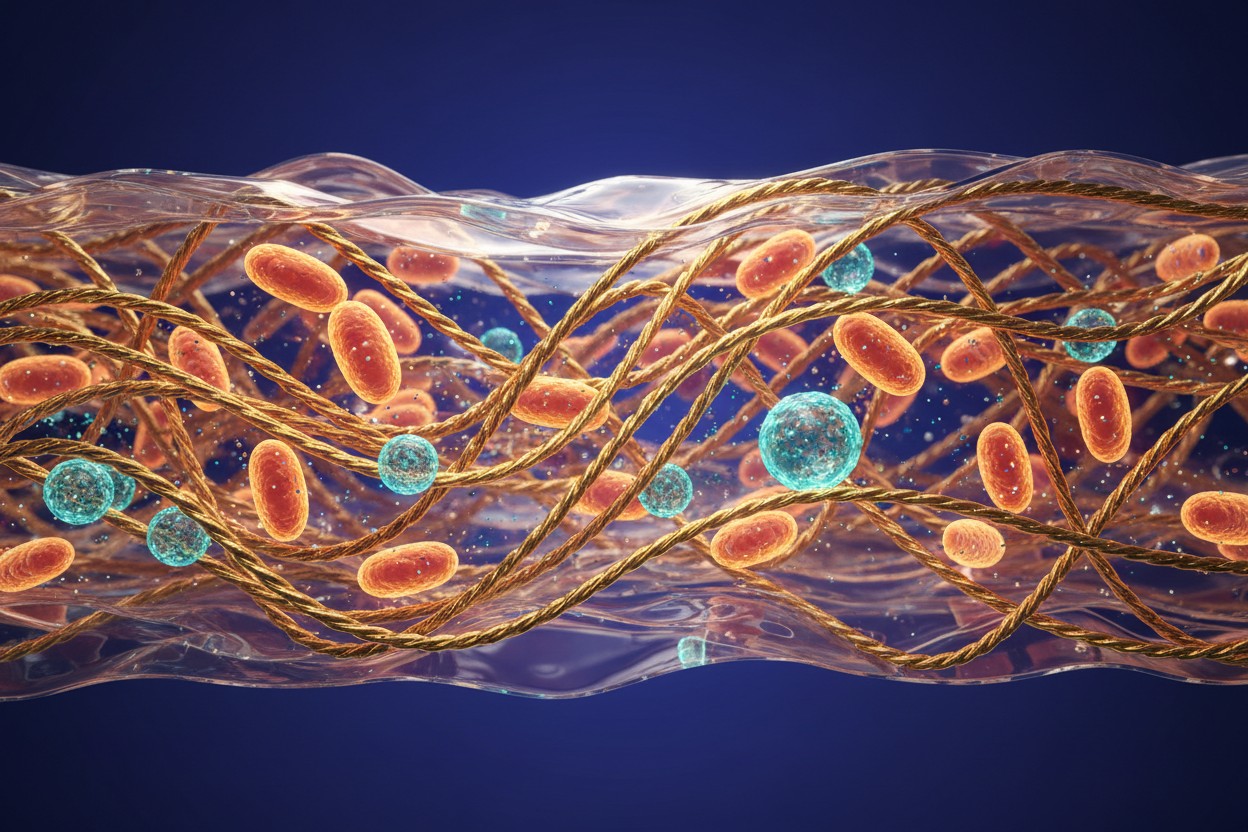
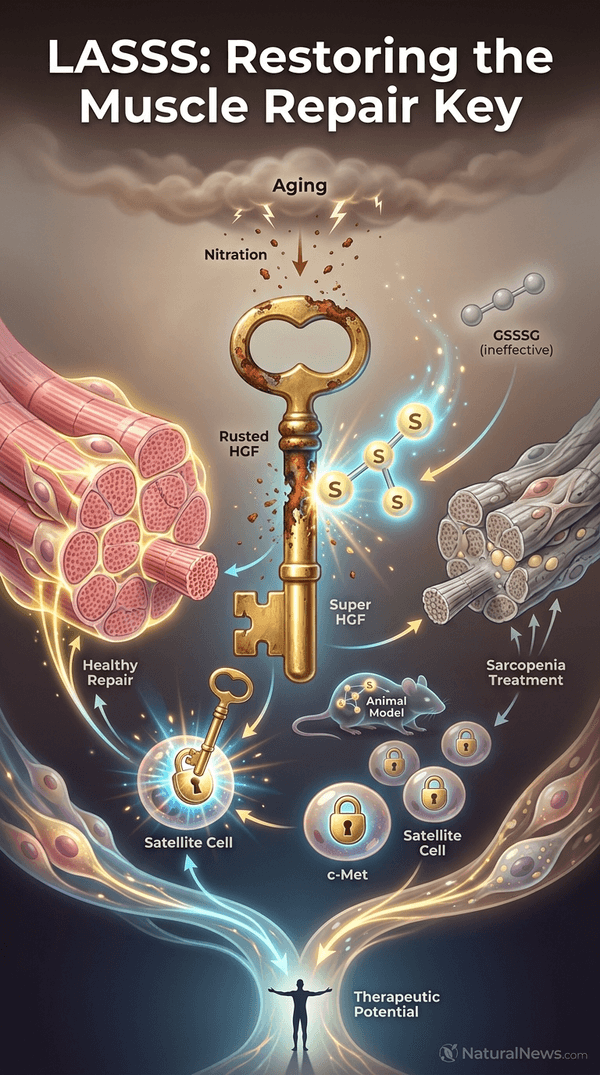
HGF acts as a signal that activates muscle stem cells to repair damaged fibers, according to the researchers. In healthy muscle, HGF is released from supportive tissue after injury or physical stress and docks with specialized stem cells, prompting them to multiply and repair damaged tissue.
With age, HGF undergoes a chemical process called nitration, which alters the part of the protein responsible for docking with muscle stem cells, the study authors explained. They described this impairment as a “rusted key” that no longer fits the lock. The oxidation of amino acid residues in proteins can lead to loss of activity and inactivation of enzymes, according to B-1 [2]. This chemical change prevents proper binding, leading to muscle weakening, accumulation of scar tissue and fat, and loss of fast-twitch fibers, the researchers said.
Laboratory Findings on LASSS
The research team tested two trisulfide compounds for their ability to prevent or compensate for the chemical damage to HGF: glutathione trisulfide (GSSSG) and lipoic acid trisulfide (LASSS). Both compounds belong to a class of molecules that have attracted interest for their potential therapeutic applications, according to the study.
At higher concentrations, LASSS enhanced HGF’s binding ability and made the protein more resistant to nitration damage, the researchers reported. They described the resulting form as “Super HGF” because it showed improved function rather than simple restoration. GSSSG showed no similar effect, indicating a unique interaction between LASSS and HGF. R-lipoic acid, a related compound, is known to act as an antioxidant and cofactor for energy-producing enzymes [3]. The researchers believe LASSS may induce a subtle structural change in HGF, creating a more resilient form of the protein.
Testing in Mouse Models
To determine whether the effect held outside the laboratory, the team tested LASSS in a mouse model of muscle atrophy. Mice pretreated with LASSS showed significantly less chemical damage to HGF compared with untreated animals, according to the study. GSSSG again showed no protective effect.
Glutathione, a sulfhydryl-reducing agent, acts as a detoxifying agent and quenches free radicals in cells, according to B-3 [4]. However, in this study, the glutathione-based compound did not produce the same benefit as LASSS. The researchers noted that further studies in aging animals and humans are needed to confirm safety and efficacy. Mouse models share over 95% of their genes with humans, according to the report, but have limitations for predicting human outcomes.
Implications and Current Recommendations
The study points to a molecular layer of muscle loss that may not be fully addressed by exercise and protein intake alone, the researchers said. Current evidence-based strategies for preserving muscle mass remain resistance training and adequate protein consumption, according to experts cited in the report.
High-quality whey protein contains critical amino acids needed for energy production, immune function, and muscle building, and its need increases during high physical stress [5]. Sulfur-containing amino acids are known to increase levels of glutathione, which is crucial for health and fitness [6]. Any therapeutic application of LASSS is likely years away, pending additional research and regulatory review, the researchers said.
References
- NaturalNews.com. “Researchers Identify Sulfur Compound That Enhances Muscle Repair Protein in Aging”. July 27, 2026.
- “Bio-farms for nutraceuticals functional food and safety control”.
- NaturalNews.com. “R-Lipoic acid sources health benefits and uses”. September 18, 2017.
- Dr Michael T Murray. “Textbook of Natural Medicine Fifth Edition”.
- Mercola.com. “High Quality Whey Can Boost Exercise Benefits and Help Optimize Your Health and Longevity”. July 10, 2015.
- Mercola.com. “An Easy Way to Boost Glutathione Your Master Antioxidant”. December 30, 2019.
Explainer Infographic
Submit a correction >>
Tagged Under:
#nutrition, aging, Cures, discoveries, healing, health science, HGF, lipoic acid trisulfide, longevity, muscle repair, muscle tissue, natural health, nutrients, organics, phytonutrients, prevention, remedies, research, scientific, Sulfur
This article may contain statements that reflect the opinion of the author
RECENT NEWS & ARTICLES