Milk recall alert: Prairie Farms pulls gallons off shelves over possible cleaning agent contamination
12/05/2025 / By Olivia Cook
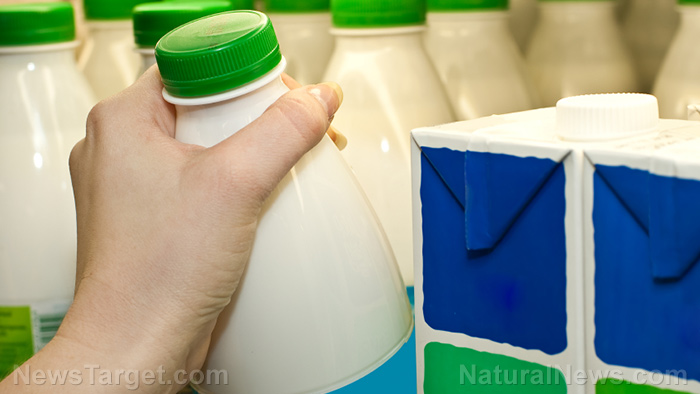
- A trusted Midwestern dairy issued a limited recall alert after identifying that some fat-free milk gallons may contain food-grade cleaning agents. The affected Prairie Farms milk came from a tightly timed production window – and while no illnesses were reported, the incident raises understandable concerns for families who rely on milk every day.
- “Food-grade“ does not mean harmless – these cleaners are engineered to dissolve baked-on milk residues, not to be consumed. A small equipment-rinsing misstep can send cleaning solutions into the product stream, turning a tool meant to protect consumers into a potential contaminant.
- This recall highlights an invisible truth: Modern dairy safety depends on thousands of tiny steps happening correctly, from the farm to the bottling line. Everything from cow health to equipment sanitation plays a role long before milk reaches your refrigerator shelf.
- Even a long-standing, 87-year-old cooperative like Prairie Farms can experience an operational glitch, despite a reputation for clean facilities and careful production. What matters most is how quickly issues are detected, communicated and resolved – and in this case, the company removed products promptly and advised customers not to consume them.
- For consumers, they key safety steps are simple: check the codes, don’t taste-test questionable milk and return or discard anything included in the recall. Understanding how contamination can happen – and how recalls protect you – strengthens your ability to make confident, informed decisions at home.
Most people rarely think twice about milk. It’s one of the simplest items in the grocery cart – a quiet staple that slips easily into breakfast routines and family recipes. You open the fridge, twist the cap, pour it in a glass or over cereal and move on with your morning. For many households, milk is almost invisible in its reliability. That’s why even a small recall can command so much attention.
When something as basic as milk is affected, it disrupts a sense of normalcy we take for granted. And late last month, shoppers in parts of Illinois and Wisconsin experienced that jolt when Prairie Farms Daily voluntarily recalled a limited number of fat-free gallon milk jugs after discovering they may contain food-grade cleaning agents.
According to a notice published through the U.S. Food and Drug Administration (FDA), the affected milk came from a narrow three-hour production window at the cooperative’s Dubuque, Iowa facility. The recall covered approximately 320 gallons – tiny, compared to the volume a major dairy produces, but large enough to raise comfort-level questions.
No illnesses were reported. The company quickly removed the remaining cartons from store shelves and offered refunds.
Food-grade cleaner isn’t as harmless as it sounds
At first glance, the phrase “food-grade cleaning agent” sounds deceptively comforting, as if it’s something close to edible. In truth, these cleaners are powerful mixtures engineered specifically to dissolve stubborn proteins, fats and mineral residues that milk leaves behind inside stainless steep pipes and tanks.
Their “food-grade” label doesn’t mean they are safe to ingest. It simply means they are safe to use on equipment that comes into contact with food when the cleaning process – including rinsing – is done correctly. Under normal operations, only microscopic, harmless traces might remain on a surface after a proper rinse and drying. Problems arise when a measurable amount of cleaner enters the product itself.
According to the company’s statement published through the FDA and reported by news outlets, Prairie Farms determined that a portion of its fat-free milk may have been contaminated with one of these solutions. The publicly available reports did not specify the exact chemical or quantity involved. However, health officials generally note that ingesting cleaning solutions – even ones designed for food-contact surfaces – can cause irritation, burns or illness depending on concentration.
These chemicals are designed for the equipment, not for the consumer. Understanding what “food-grade” really means helps consumers see both sides of the safety system: The chemicals are strong enough to make dairy equipment exceptionally clean, but that same strength makes them unsuitable for consumption. When a misstep occurs, even a small one, a recall becomes the responsible course of action.
How can cleaning chemicals slip into milk?
Dairy facilities rely on clean-in-place (CIP) systems – fully automated programs that circulate water, detergents and sanitizers through the pipes and tanks without taking equipment apart. According to materials published by the Agriculture Institute, CIP systems are designed around four major steps:
- Contact – ensuring the cleaner reaches every internal surface
- Dislocation – breaking down proteins, fats and mineral deposits
- Dispersion – flushing loosened residues away
- Prevention of redisposition – stopping debris from clinging back to clean surfaces
These steps use a mix of alkaline detergents for protein removal, acidic cleaners for mineral deposits and specialized surfactants that help cleaning solutions reach tiny, hidden crevices. It’s a chemistry-driven dance that keeps equipment sanitary.
But because the cleaning chemicals are strong and because milk residue is stubborn, the system has to work with precision. If something interrupts a rinse cycle, if a valve doesn’t close at the right moment or if equipment isn’t given enough time to flush and dry – a small amount of cleaner can remain in the system.
It’s the industrial version of washing a mixing bowl in your kitchen but forgetting to rinse out the soap thoroughly before drying and using it again. The difference is scale: dairy plants process thousands of gallons and even a short misstep is enough to prompt a recall.
Water quality can complicate things too. Hard water can reduce the effectiveness of cleaners or create mineral scale that traps residues. Old gaskets or worn-down equipment parts can leach materials or hold onto cleaning chemicals. That’s why dairy plants conduct routine inspections and testing – because every layer of the system matters.
Incidents like Prairie Farms’ recall are not common, but they’re also not impossible. The represent the small margin of error that modern food safety tries so hard to eliminate.
While the public tends to focus on what happens inside factories, the Agriculture Institute emphasizes that clean milk production actually begins at the farm – long before milk reaches any processing plant pipe, vat or tanker truck.
Milk is inherently vulnerable. Once it leaves the cow, it can easily absorb odors, flavors and microorganisms.
What consumers can do after a milk recall
Milk recalls can feel unsettling, but they’re also a sign that safety monitoring systems are doing their job. Remember the following when a recall is announced:
- Check the code dates and plant codes. They’re usually listed in recall notices.
- Do not taste-test questionable milk. If your milk matches the recall information, do not sip it to confirm flavor or safety.
- Return or discard the product. Companies typically offer refunds and disposal is considered safe.
- Pay attention to symptoms. If someone drank milk later found to be part of a recall involving chemical residues and experiences burning, nausea, throat irritation or vomiting, they should contact their doctor or healthcare provider. No such illnesses were reported in this case.
- Remember that “low risk” does not mean “no risk.” Food-grade cleaners are not toxic in humans in trace amounts, but larger concentrations can cause irritation or illness. The best approach is caution.
According to BrightU.AI‘s Enoch, milk goes through more steps – and more science – than people ever see. Usually, everything works so well that people forget the system is even there.
Watch this video to learn more about Prairie Farms recalling milk sold at stores in Illinois and Wisconsin.
This video is from the Daily Videos channel on Brighteon.com.
Sources include:
Submit a correction >>
Tagged Under:
clean food watch, cleaning agent, dairy contamination, dairy plants, Dangerous, FDA, food safety, food science, food supply, frankenfood, grocery, milk, poison, Prairie Farms Dairy, Product recall, products, Public Health, stop eating poison, toxic chemicals, toxic ingredients
This article may contain statements that reflect the opinion of the author
RECENT NEWS & ARTICLES