The phantom menace: How a vanished Zika crisis birthed a permanent bureaucracy
12/02/2025 / By Willow Tohi
- A decade after a global panic, the predicted pandemic of Zika-linked microcephaly never materialized, with cases reverting to historical baselines.
- The narrative has shifted from a clear link to severe microcephaly to a nebulous “Congenital Zika Syndrome” (CZS), a broad diagnosis critics call a face-saving redefinition.
- The original 2015-2016 “outbreak” in Northeast Brazil is now widely seen as a statistical mirage, amplified by lack of baseline data, lax diagnostic criteria and media hysteria.
- The crisis was leveraged by activist groups and abortion-rights advocates as a political tool, leading to lasting demographic and economic harm in the region.
- Despite the vanished threat, institutional momentum and funding continue to fuel research into vaccines and syndromes based on a largely discredited hypothesis.
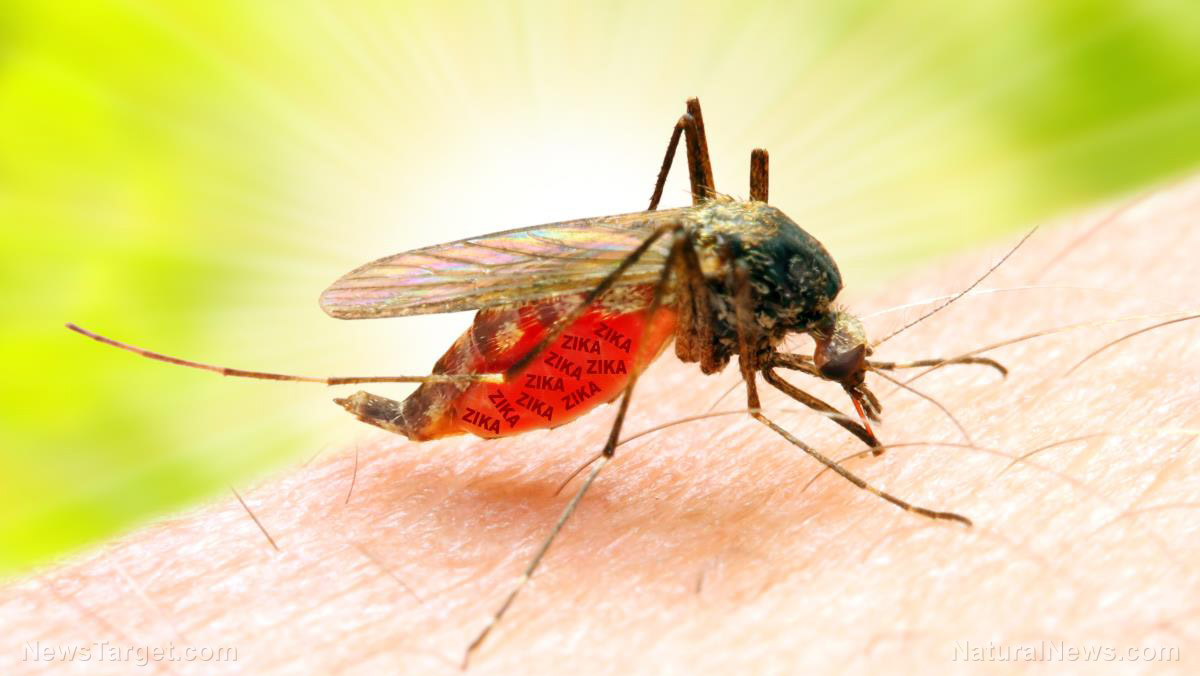
In 2015, the world was gripped by a terrifying new threat: the Zika virus, a once-obscure pathogen blamed for causing a sudden surge of severe birth defects in Brazil. Global health agencies declared emergencies, governments advised women to delay pregnancy, and headlines warned of a pandemic of “shrunken baby heads.” A decade later, the predicted catastrophe of hundreds of thousands of microcephalic babies never happened. The alarming case numbers evaporated as quickly as they appeared, reverting to historical baselines. Yet, rather than admit the alarm was a spectacular false positive, the public health narrative performed a quiet, cynical pivot—retiring the discredited link to severe microcephaly and replacing it with the nebulous, unfalsifiable diagnosis of “Congenital Zika Syndrome.”
From microcephaly panic to “CZS”: A syndrome of convenience
The original foundation of the crisis was always shaky. Northeast Brazil had no systematic surveillance for microcephaly prior to 2015, making it impossible to distinguish a real outbreak from normal statistical fluctuation. When a modest cluster of cases caught attention, it was aggrandized into a global emergency. Retrospective data soon revealed the truth: in states like Paraíba, microcephaly rates in 2015 were indistinguishable from prior years. The “surge” was an artifact of new attention combined with Brazil’s uniquely lax diagnostic threshold, which inflated case counts by a factor of 17.
With the core claim collapsing, the goalposts shifted. Enter “Congenital Zika Syndrome” (CZS), a retrospective, spectrum-based construct that now sweeps in everything from rare brain pathologies to subtle neurodevelopmental delays. These delays are indistinguishable from the background noise of poverty, malnutrition and other congenital infections long endemic in the region. CZS is not an evolution of science but a bureaucratic face-saving maneuver—an academic version of a comedian frantically inventing a new excuse when the first joke falls flat.
A crisis weaponized, with lasting collateral damage
The World Health Organization’s 2016 recommendation that women consider delaying pregnancy was rapidly weaponized beyond public health. In Brazil, it became a battering ram for reproductive-rights advocates who flooded the courts, using the “Zika-microcephaly” threat to demand the decriminalization of abortion. External NGOs decried “reproductive injustice.” Acknowledging that the microcephaly crisis was a mirage would have meant surrendering a potent political tool.
In a cruel irony, some of the earliest voices amplifying the Zika-microcephaly link were physicians from activist groups who had openly hoped a major disease outbreak would force resources into the neglected Northeast. They got their wish: global headlines and hundreds of millions in funding followed. The lasting outcome, however, has been the opposite of uplift. The communities they sought to help now grapple with a sustained fertility collapse and an economic chill—a demographic harm prolonged by a coalition that could not declare the monster a mirage.
A geographically myopic “pandemic”
The epidemiology of CZS tells a damning story. A decade on, the syndrome remains almost exclusively Brazilian, overwhelmingly concentrated in the Northeast, and largely confined to the 2015-2017 period. Vast dengue-endemic populations in India, Indonesia and Africa, with identical mosquitoes and confirmed Zika circulation, have contributed essentially zero cases. A 2025 review in The Lancet attempting to sustain the CZS narrative inadvertently highlights this: for 34 of 39 countries analyzed, the authors rely on data from 2018—years after the “epidemic” collapsed—with most reporting no cases.
This extreme geographical skew defies biological plausibility for a mosquito-borne virus. It aligns perfectly, however, with an epidemic of perception—one that exploded precisely where media hysteria and institutional panic were loudest. Meanwhile, dengue virus, which shares 60% of its structure with Zika and infects millions of pregnant women annually, has never produced a recognizable congenital syndrome. If Zika were a potent teratogen, it would be a revolutionary anomaly without precedent in its viral family.
The machine grinds on, fueled by fear and funding
Despite the evaporated threat, the institutional machinery built during the panic resists being dismantled. Researchers whose careers and labs were built on Zika grants warn of decadal resurgences unsupported by evidence, speculations useful for justifying ongoing vaccine development. Journals lend authority to constructs that have failed every predictive test. The public receives no clear reassurance that the threat was vastly overstated, that the virus is clinically closer to a mild dengue than a monster.
The human cost is measured not in disability-adjusted life years from a phantom syndrome, but in the children never conceived, the dreams postponed by families and the enduring shadow over a region’s future. Historical context is clear: this pattern of fear outstripping evidence, followed by bureaucratic entrenchment, echoes past scares like the 1976 swine flu affair. It is a cautionary tale of how a vanishing monster can leave a very permanent infrastructure in its wake—one sustained not by evidence, but by momentum, money and the refusal to concede a false alarm.
Sources for this article include:
Submit a correction >>
Tagged Under:
brain damaged, Brazil, Censored Science, conspiracy, deception, depopulation scheme, faked, false-flag, infections, Medical Tyranny, outbreak, pandemic, panic, Plague, science deception, shrunken baby heads, Suppressed, women's health, Zika
This article may contain statements that reflect the opinion of the author
RECENT NEWS & ARTICLES